Overview
Duration :
10 days
Secondary Activity:
Nature & Culture
Max altitude :
4,190 m
Transportation:
Private vehicle and Domestic flight (customizable)
Trip ends in:
Kathmandu
Accomodation:
Lodge and Tea-House
Primary activity:
Trekking & Hiking
Group Size:
Min.1 pax
Country:
Nepal
Trip starts from:
Kathmandu
Diffficulty:
Moderate
Meals:
Nepalese and Continental cuisine
Best Season:
March–May (spring), September – November (Autumn), and June–September (Monsoon)
Trip route:
Kathmandu-Pokhara-Baglung-Burtibang-Dhorpatan-Bukipatan-Tikadhara and Return through same route
Trip introduction
The only trek that winds through Nepal’s one and only hunting reserve, beneath the majestic Dhaulagiri Range, leads to the hidden Dhorpatan Village—where untouched wilderness, rich culture, and breathtaking Himalayan landscapes come together in one unforgettable journey: the Dhorpatan Hunting Reserve Trek. Far from the crowded trails of Everest Base Camp and Annapurna Base Camp, this trail promises to capture your heart with the raw, untouched beauty of Dhorpatan.
Dhorpatan Hunting Reserve | Nepal
Situated in the western hills of Nepal, spanning across three districts—Eastern Rukum, Myagdi, and Baglung—and nestled within the majestic Dhaulagiri Mountain Range, lies the Dhorpatan Hunting Reserve. Established in 1983 by the Government of Nepal, it was officially declared the country’s only hunting reserve in 1987.
Unlike Nepal’s national parks, such as Chitwan, Sagarmatha, and Langtang National Park, where hunting is prohibited, Dhorpatan uniquely combines conservation with strictly regulated trophy hunting. The revenue generated from hunting licenses helps support wildlife conservation and protect the surrounding ecosystem, while strict regulations help prevent illegal hunting and poaching.
Flora and Fauna of Dhorpatan
Nestled below the Dhaulagiri range, Dhorpatan packs forests, grasslands, and the snowline into a single reserve, with plant and animal life changing as the altitude rises. From pine, fir, and rhododendron forests to high alpine patans, the area supports rare wildlife such as blue sheep (bharal), Himalayan tahr, musk deer, and red pandas.
Flora:
58 recorded plant species, including 36 endemic flowering plants. Notable species:
- Rhododendron — Nepal’s national flower, covers mid-hill slopes in spring
- Himalayan oak and birch — form the dense mid-hill forest canopy
- Fir, pine, hemlock, juniper, spruce — dominate the colder, higher forest belt
- Alpine grasses (Kobresia, Carex) — cover the high-altitude meadows above 4,000m, grazed by blue sheep and livestock
Fauna:
18 mammal and 137 bird species, anchored by one defining predator-prey pair. Notable species:
- Blue sheep — the reserve’s signature species and its most hunted animal
- Snow leopard — its main predator, rarely sighted
- Himalayan tahr — the only other legally huntable species, hunted far less often than blue sheep
- Red panda, musk deer, black bear — protected, rare sightings
- Danphe and cheer pheasant — flagship birds among 137 species
Note: Blue sheep and Himalayan tahr are the only two species legally huntable in Dhorpatan — everything else in the reserve is protected.
Dhorpatan Village: A Culturally Enriched Village
Dhorpatan Village sits at around 2,850–2,900m, serving as the Dhorpatan Hunting Reserve’s headquarters. What makes it culturally rare isn’t just its remoteness—it’s the fact that two entirely distinct spiritual traditions have coexisted here, side by side, for over six decades: the indigenous Kham Magar and Tibetan refugee communities. Walking through the village, this harmony can be seen everywhere—Buddhist prayer flags and monasteries can be found alongside traditional shamanic rituals and Hindu festivals, showing how different beliefs and traditions peacefully coexist all within a single community. Few places in Nepal pack this much distinct cultural and religious heritage into one village, making Dhorpatan village a beautiful example of religious tolerance and rich culture.
Kham Magar
The indigenous Kham Magar of Dhorpatan follow a transhumant pastoralist lifestyle, seasonally moving their livestock between high-altitude valleys and lower settlements. Their spiritual life is deeply rooted in Shamanism—healing and spirit communication—and Animism, the belief that natural objects and elements possess spiritual souls. At the heart of these traditions are Dhami-Jhakri, spiritual healers who perform rituals to honor nature and ancestors, reflecting the Kham Magar’s close spiritual connection with their surroundings.
Tibetan Refugee
The Tibetan refugee settlement of Dhorpatan, established after the 1959 Tibetan exodus, is home to a Bonpo community that preserves the Bon religion through its monastery and traditional spiritual practices. The settlement also maintains traditional Tibetan medicine and a living tradition of wool weaving and handicrafts, keeping its cultural heritage alive.
When is the best time to Trek in Dhorpatan?
The best time for the Dhorpatan Trek is considered to be spring (March–May) and autumn (September – November). These two seasons provide us with the most stable weather and least challenges while trekking in Dhorpatan.
Can you trek to Dhorpatan during monsoon (June–September)?
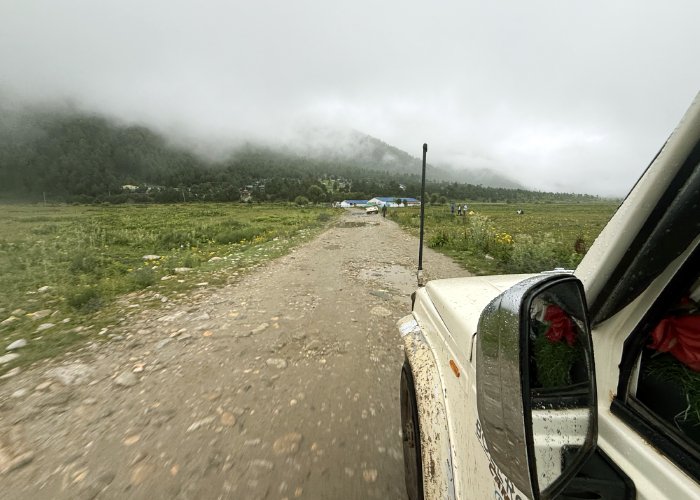
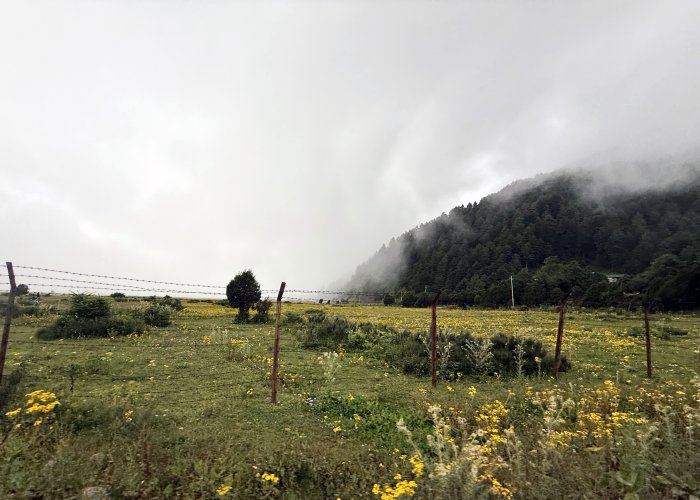
Yes — Dhorpatan is an underrated option for the monsoon season. Its partial rain-shadow location means less heavy rain, landslides, and leeches than many other trekking areas. During this time, the high alpine meadows (patans) turn lush green and fill with wildflowers, making it a great choice for trekkers looking for beautiful landscapes. However, road conditions can be comparatively difficult during this season.
What is the duration of the Dhorpatan Hunting Reserve Trek?
The duration of the Dhorpatan Trek depends on your chosen itinerary and can range from 6 to 15 days, or even less depending on your schedule. The itinerary can also be customized to suit your needs and preferences.
How difficult is the Dhorpatan Hunting Reserve Trek?
The Dhorpatan Trek is considered beginner to intermediate in difficulty. It is suitable for trekkers with a basic level of fitness and preparation. The trek reaches a maximum altitude of around 4,190 m at Tikadhara, the highest point on the route.
How to Get to Dhorpatan from Kathmandu?
There’s no direct road to Dhorpatan, so you have two ways to reach it — a budget road route and a faster flight-assisted route.
Quick answer: The standard route is Kathmandu → Pokhara (bus, 6–7 hrs) → Burtibang (bus, 6–7 hrs) → Dhorpatan (4WD, 5 hrs) over 2 days. The fast route swaps the first bus for a 25–30 min flight, making it doable in a single day.
Option 1: Standard Route (By Road) — Budget-Friendly
- Kathmandu to Pokhara by bus — 6 to 7 hours (traffic-dependent) | Overnight stay in Pokhara
- Pokhara to Burtibang by bus — 6 to 7 hours | Burtibang to Dhorpatan by 4WD — 4 to 5 hours (rough road conditions)
Total: 2 Days
Option 2: Fast Route (By Air) — If You’re Short on Time
- Kathmandu to Pokhara by flight — 25 to 30 minutes | Same day: Pokhara to Burtibang by bus | Burtibang to Dhorpatan by 4WD — 4 to 5 hours
Total: 1 Day
Note: The Route and Itinerary can be modified to suit your desires.
Why Choose the Dhorpatan Hunting Reserve Trek Over Other Treks?
Unlike the Langtang Valley Trek or Manaslu Circuit, which have well-established trails and attract many international trekkers, the Dhorpatan Hunting Reserve Trek remains one of Nepal’s truly off-the-beaten-path treks. Here’s what makes it different:
- Only hunting reserve trek in Nepal — the only trek in Nepal that passes through a legally designated hunting reserve, offering chances to spot rare wildlife such as blue sheep and snow leopards.
- Wildlife meets culture — a unique mix of wildlife and cultural trekking, passing through landscapes shared by Kham Magar and Tibetan refugee communities.
- Peaceful and uncrowded — the reserve sees only around 100 foreign visitors a year, so the trail still feels quiet and less commercialized rather than crowded.
- Hidden and untouched trails — a lesser-known trekking route through remote forests, alpine meadows (patan), and natural landscapes, far from the busy tourist trails.
Permits Required for the Dhorpatan Hunting Reserve Trek
The following are the required permits for the Dhorpatan Hunting Reserve Trek:
- Dhorpatan Hunting Reserve entry fee – $20 per person
- TIMS (Trekkers’ Information Management System) card
Note: For price details, please feel free to contact us.
Dhorpatan Hunting Reserve Trek Itinerary Options
Here are Our two most popular itinerary options for the Dhorpatan Hunting Reserve Trek, so you can pick the one that fits your schedule:
- 6-Day Express Itinerary — for trekkers short on time. Uses the flight route in and out, and skips Kathmandu sightseeing and the Dhorpatan rest day.
- 10-Day Classic Itinerary — the complete experience. Includes Kathmandu sightseeing, a rest day in Dhorpatan, and the full Bukipatan–Tikadhara route.
6-Day Express Itinerary
Day 1: Arrival in Kathmandu
Day 2: Kathmandu to Dhorpatan
- Kathmandu to Pokhara | 25 to 30 min flight
- Pokhara to BurtiBang | 6 to 7 hrs drive
- BurtiBang to Dhorpatan | 4-5 hrs drive via 4WD
Day 3: Dhorpatan to Bukipatan | 5-6 hrs hike
Day 4: Bukipatan to Tikadhara and back to Dhorpatan | 7-8 hrs hike
Day 5: Dhorpatan to Kathmandu
- Dhorpatan to Pokhara | 8 to 9 hrs drive
- Pokhara to Kathmandu | 25 to 30 min Flight
Day 6: Departure Day
Special Note:
If this itinerary doesn’t suit your requirement or if you want to customize it, please feel free to contact us. This trek could be customized as per your required time frame and budget limits.
Overview
-
Day 1Arrival in Kathmandu (1,350m/4,428ft)
-
Day 2Kathmandu: Sightseeing and Trek Preparation
-
Day 3Drive from Kathmandu to Pokhara (827m) and sightseeing in Pokhara — 6 to 7 hrs by road, or 25 to 30 min by flight
-
Day 4Drive from Pokhara (827 m) to Burtibang (1330m) (by regular vehicle) — 6 to 7 hrs, then Drive from Burtibang to Dhorpatan (2,900 m) (by 4WD vehicle) — 4 to 5 hrs
-
Day 5Dhorpatan (2,900 m) | Rest Day - Horse Ride and other activities
-
Day 6Dhorpatan (2,900m) to Bukipatan (4000 m) | 5 to 6 hrs hike
-
Day 7Bukipatan (4000m) to Tikadhara (4,190m) and back to Dhorpatan (2,900m) | 7-8 hrs hike
-
Day 7Bukipatan (4000m) to Tikadhara (4,190m) and back to Dhorpatan (2,900m) | 7-8 hrs hike
-
Day 8Dhorpatan (2900 m) to Pokhara (827 m) | 8 – 9 hrs drive
-
Day 9Drive from Pokhara (827m) to Kathmandu (1350 m) — 6 to 7 hrs by road, or 25 to 30 min by flight
-
Day 10Departure from Kathmandu
Detail Itinerary
Day 1 : Arrival in Kathmandu (1,350m/4,428ft):
Upon arrival at Tribhuvan International Airport, Kathmandu, a representative from Nepal Mountain Trekkers will welcome you and transfer you to your hotel in Thamel. After check-in and some rest, take a short walk around the area. In the evening, you’ll have a trek briefing and meet your guide, followed by a welcome dinner featuring Nepali cuisine.
Day 2 : Kathmandu: Sightseeing and Trek Preparation:
Your first morning in Nepal begins with an early breakfast, followed by a visit to the Nepal Mountain Trekkers office in Thamel. There, you meet your tour guide, trekking leader, and operations director, collect your essential trekking gear and permits, and prepare for the journey. You then spend the day exploring Kathmandu’s UNESCO World Heritage Sites—Kathmandu Durbar Square, Swayambhunath Stupa, Pashupatinath Temple, and Boudhanath Stupa—until sunset.
Day 3 : Drive from Kathmandu to Pokhara (827m) and sightseeing in Pokhara — 6 to 7 hrs by road, or 25 to 30 min by flight:
Today, you start early with breakfast and head toward the City of Lakes. Enjoy a scenic 6–7 hour drive through lush hills, rivers, and traditional villages. Once in Pokhara, unwind with an evening detour to Phewa Lake—a peaceful way to relax after the drive. If you want to catch the sunset, a short hike to the World Peace Pagoda is a great alternative, but my personal favorite is the evening walk around Phewa Lake.
Day 4 : Drive from Pokhara (827 m) to Burtibang (1330m) (by regular vehicle) — 6 to 7 hrs, then Drive from Burtibang to Dhorpatan (2,900 m) (by 4WD vehicle) — 4 to 5 hrs:
After an early breakfast in Pokhara, we set off toward Burtibang, following a road that switches between smooth blacktop and rough, unpaved stretches as we climb through Nepal’s mid-hills—a good warm-up for the 4WD journey ahead. We stop in Baglung for lunch and a quick look around, including its famous suspension bridge, reportedly the longest of its kind in Nepal, with sweeping views of the dramatic Kali Gandaki River gorge below.
From Baglung, we continue to Burtibang, take a short rest, and then switch to a 4WD vehicle for the rugged drive to Dhorpatan. As we climb higher, we pass through dense forests, green hills, and eventually reach the beautiful high alpine meadows. We finally arrive in Dhorpatan, where a warm Nepali cuisine dinner brings this long but scenic travel day to an end.
Day 5 : Dhorpatan (2,900 m) | Rest Day - Horse Ride and other activities:
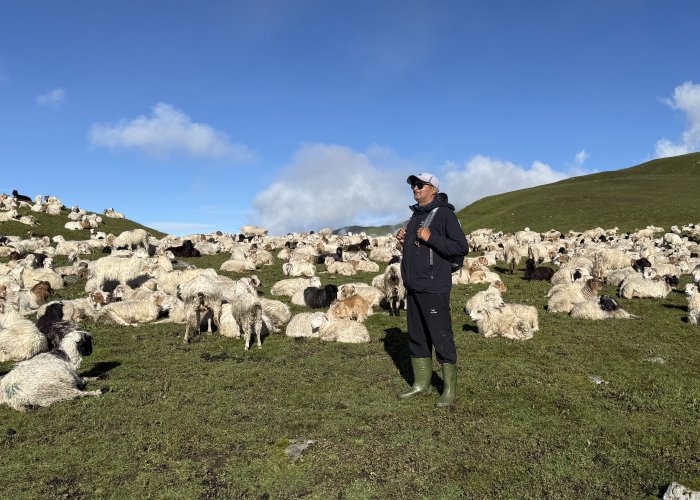
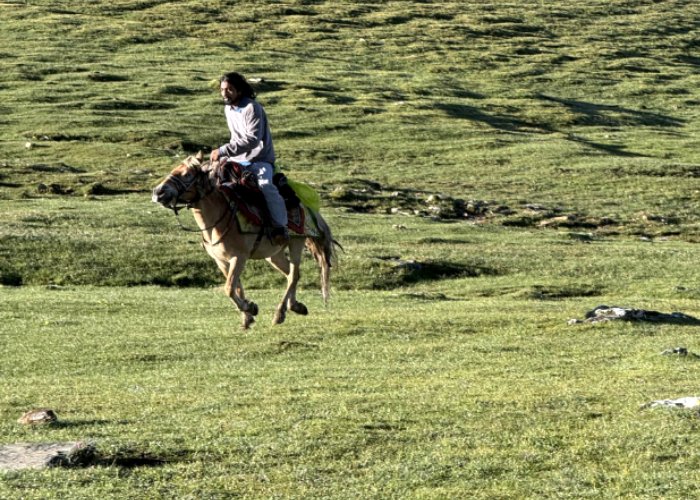
After days of driving and walking to reach the valley, today is built purely around slowing down and soaking in Dhorpatan itself. Horse riding is the most popular activity here, with local riders taking guests along easy trails toward Niseldhor and the Jaljala pass area. You can also visit the Bonpo Monastery, home to the Bon religion practiced by the valley’s Tibetan refugee community, one of two distinct communities living here alongside the local Kham Magar. Take time to walk through the village and surrounding grasslands, where blue sheep are often spotted grazing against the backdrop of green valley scenery. It’s also a good chance to get a real taste of Dhorpatan — local herders keep sheep, cows, buffalo, and goats, producing fresh, organic dairy like milk, ghee, and cheese, some of which makes for a great local souvenir to take home.
Day 6 : Dhorpatan (2,900m) to Bukipatan (4000 m) | 5 to 6 hrs hike:
Today’s route climbs steadily out of Dhorpatan Valley into Bukipatan, one of the region’s most scenic high-altitude meadows. Both hiking and horse riding options are available — for those riding, the standard arrangement is one guide and one horse per person. The steady elevation gain does carry some risk of altitude sickness, so a slow, steady pace is important as we climb. Bukipatan is best known for its wide alpine grassland, grazing sheep herds, and wildflowers that bloom across the meadow during the monsoon months, all set against the towering backdrop of Dhaulagiri and Gurja Himal. Accommodation here is basic — we stay in gothstays, simple herder-style shelters that offer just enough comfort for the night. As the sun sets over the meadow and the peaks turn gold, we settle in for a well-earned rest, falling asleep to one of the most peaceful, untouched views the Himalaya has to offer.
Day 7 : Bukipatan (4000m) to Tikadhara (4,190m) and back to Dhorpatan (2,900m) | 7-8 hrs hike:
Today we head deeper into the highlands, walking from Bukipatan up to Tikadhara, a panoramic viewpoint offering sweeping views of the Dhaulagiri range and the surrounding hills. From here, we can also spot sheep herds grazing across the nearby meadows. After taking in the views and exploring the area, we retrace the same trail back down through Bukipatan to Dhorpatan Valley. As this is a long day covering significant elevation change, there’s some risk of altitude-related fatigue or mild headaches, so a steady pace and proper hydration are important throughout. By evening, we’re back in Dhorpatan, resting well after a demanding but rewarding day spent among some of the most untouched highland scenery in the region.
Day 7 : Bukipatan (4000m) to Tikadhara (4,190m) and back to Dhorpatan (2,900m) | 7-8 hrs hike:
Today we head deeper into the highlands, walking from Bukipatan up to Tikadhara, a panoramic viewpoint offering sweeping views of the Dhaulagiri range and the surrounding hills. From here, we can also spot sheep herds grazing across the nearby meadows. After taking in the views and exploring the area, we retrace the same trail back down through Bukipatan to Dhorpatan Valley. As this is a long day covering significant elevation change, there’s some risk of altitude-related fatigue or mild headaches, so a steady pace and proper hydration are important throughout. By evening, we’re back in Dhorpatan, resting well after a demanding but rewarding day spent among some of the most untouched highland scenery in the region.
Day 8 : Dhorpatan (2900 m) to Pokhara (827 m) | 8 – 9 hrs drive:
After breakfast, we say goodbye to Dhorpatan and begin the drive back to Pokhara via Burtibang and Baglung, taking short breaks along the way to stretch, take in the views, and avoid drive fatigue. Once in Pokhara, you’re free to simply rest, or head out to explore — options include Begnas or Rupa Lake, or religious sites like Tal Barahi Temple on Phewa Lake, the World Peace Pagoda, or Bindhyabasini Temple.
Day 9 : Drive from Pokhara (827m) to Kathmandu (1350 m) — 6 to 7 hrs by road, or 25 to 30 min by flight:
Today we head back to Kathmandu, either by road or a short scenic flight for those short on time. After checking into your hotel, the rest of the day is free — use it to pick up last-minute souvenirs, revisit your favorite spots in the city, or wind down with a farewell dinner alongside your guides to mark the end of the trip.
Day 10 : Departure from Kathmandu:
Depending on your flight time, our team will transfer you to the international airport. As you leave Nepal, you carry with you not just photographs, but the memories of Nepal’s only hunting reserve, the wild beauty of Dhorpatan, and the quiet, untouched valleys few travelers ever get to see.
Price Includes
- Airport Pick-up and drop service
- Hotel in Kathmandu(Hotel Green Horizon or of your desire)
- Hotel in Pokhara
- All accommodation during the trek in the best hotels/tea-houses in the area (differing according to the price you wish to spend)
- Sanitation: The accommodation we provide will be neat and clean with warm-hospitality and quality services.
- Single/Twin-sharing Accommodation (as per budget): Your group won’t have to share your accommodation with anyone else so your privacy is protected
- All foods during the trek: Breakfast, Lunch, and Dinner; any items on the menu as much as you wish to consume.
- We provide hygienic and safe meals to re-energize you.
- We request you not to waste your meals for it is difficult to transport food in the rural area.
- You are not allowed to share your meals with anyone else from another group.
- Transportation costs: Drive (Ktm – Pkr- Ktm) with other driving fares.
- Professional and Highly experienced English-speaking Trekking Guide licensed by the Government. Including their lodging and food.
- Local Staff: Our guides are locals of the region which ensures that you will surely get to explore a bit more during the trek than with any other guides.
- Experienced: With an experience of more than a decade of working in this field, our trekking guides possess excellent knowledge on briefing during the trek as well as they are experts in handling all kinds of critical situations which might occur during the trek.
- Insurance: Nepal Mountain Trekkers have an insurance policy for all our trekking staff.
- Porters (1 porter for 2 trekkers with a max load of 25 KG). Including their lodging and food.
- Local Staffs: The porters we hire belong to the same region where we trek in order to provide employment opportunities to the locals as well as to make you explore every prospect of the region.
- Trekking permits: TIMS card and Dhorpatan Hunting Reserve Entry Fee
- First aid medical box
- T-shirt, Duffel Bag, and Trekking Map with Company Logo
- Rescue Arrangement Service
- Trekking gears like Sleeping bags and down jackets made available on rent
- 13% VAT and 10% company service charge
- Farewell Dinner
Price Excludes
- Visa fee to enter Nepal (Visa Information)
- International flight tickets and extra baggage charges
- Foods in Pokhara and Kathmandu
- Extra night accommodation and meal costs in Kathmandu due to any change in the scheduled itinerary
- Travel insurance/ Rescue operation costs
- All personal expenses
- Tip for guides and porters
Trip Gallery
Equipments
 HEAD
HEAD
- Sun hat or scarf
- Light balaclava or warm fleece hat
- Sunglasses
- Head Torch
- Lip Balm
- Sun’s Cream ( spf 50+)
UPPER BODY
- Cotton t-shirts or thermals
- Fleece jacket
- Waterproof and windproof jacket
- Down jacket (Light-weighted)
LOWER BODY
- Lightweight cotton pants (long)
- Waterproof pants
- Underwear and Half Pants
FEET
- Thin inner socks
- Thick, warm wool hiking socks
- Comfortable hiking boots
- Light-weighted sandals
HANDS
- Gloves
- Creams
ACCESSORIES
- Sleeping bag rated to 0°C
- Trekking bag (Rucksack)
- Duffel bag
- Large plastic bags (for keeping items dry inside trek bag)
- Trekking poles (optional, recommended)
- Water bottle or camel bag
- Toiletries
MISCELLANEOUS
- Medicines: We recommend you bring your regular medicines; we will provide a first aid kit from our side.
- Light-weighted Towel
- Swiss Knife
- Passport and extra passport photos
- Water Purifying Iodine Tablets, Drop or Sterilizer
Related Trips
You will also like …