Overview
Duration :
13 days
Secondary Activity:
Exploring the trails of Everest
Max altitude :
3,870 m/12,694 ft
Transportation:
Domestic Flight and Private Vehicle
Trip ends in:
Kathmandu
Accomodation:
Hotel and Tea-House
Primary activity:
Mani Rimdu Festival Celebration
Group Size:
Min. 1 Pax
Country:
Nepal
Trip starts from:
Kathmandu
Diffficulty:
Moderate
Meals:
Nepali and Continental
Best Season:
October
Trip route:
Kathmandu-Lukla-Phakding-Namche Bazaar-Tengboche-Monjo-Lukla-Kathmandu
Trip introduction
Mani Rimdu Festival Trek: A Trek highlighting the rich Sherpa Culture
The Mani Rimdu Festival is one of the most sacred and culturally significant festivals for the Sherpa people of Nepal. This festival is held every year at Tengboche Monastery, located in the Everest Region. This festival is celebrated at 3,780m above sea level.
In 2026, the Mani Rimdu Festival dates are October 26-28. These three days are a part of the 19-day monastic ritual cycle. These three days coincide with the full moon of the 9th Tibetan Month.
The Mani Rimdu Festival Trek offered by Nepal Mountain Trekkers mixes the Everest region trekking with the rich Sherpa culture. Unlike typical Everest Base Camp Treks, this Trek offers you the opportunity to explore the soul of the Khumbu region.
Why is the Mani Rimdu Festival celebrated?
Mani Rimdu is the most sacred festival of the Sherpa people, celebrated at Tengboche Monastery to honor Guru Rinpoche and commemorate Buddhism’s victory over the ancient Bon religion. They perform masked cham dances, sacred blessings, and monks symbolically conquering evil, bringing spiritual protection and harmony to the world.
About Bon Religion
Bon (also known as Yungdrung Bon) is Tibet’s oldest religion, practiced long before Buddhism arrived. The Mani Rimdu festival celebrates the victory of Buddhism over Bon, marking a big shift in the spiritual history of the Himalayas. Guru Padmasambhava brought Buddhism to Tibet in the 8th century, and over time it replaced Bon as the main religion of the region.
When and where Mani Rimdu Festival celebrated?
The date falls on the full moon of the 9th Tibetan month, which in 2026 corresponds to October 26-28. The date of the celebration changes and is based on the lunar cycle. If you are planning in 2027, contact Nepal Mountain Trekkers for the most up-to-date schedule and to plan your trek accordingly.
In Tibetan Buddhism, the full moon holds deep spiritual significance. It is considered the most powerful and auspicious time for religious rituals and ceremonies. Celebrating the festival on the full moon amplifies the spiritual potency of every prayer, dance, and blessing performed.
The festival is primarily celebrated at Tengboche Monastery, located at 3,867 m above the Dudh Koshi valley in the Sagarmatha National Park, Khumbu, Nepal. The festival is also celebrated at Thame Monastery and Chiwong Monastery, though Tengboche remains the primary and most accessible celebration site for trekkers.
About Tengboche Monastery
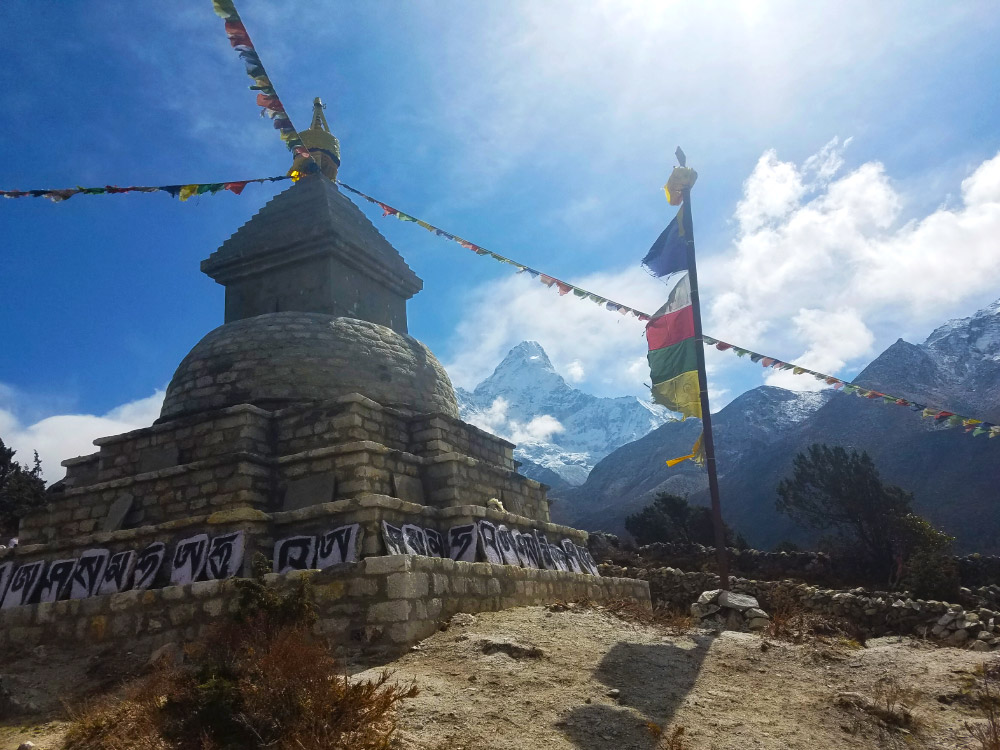
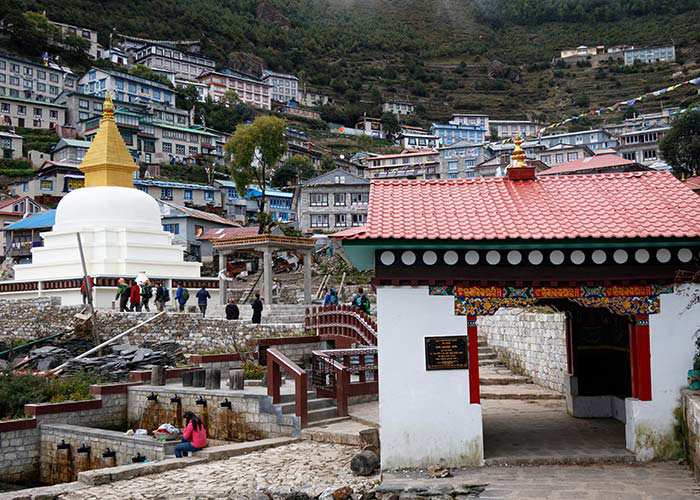
Tengboche is the largest and most revered monastery in the Everest region, offering views of Ama Dablam and the Everest.The monastery is a spiritual heart of the Khumbu region, drawing both pilgrims and trekkers from around the world. It is also the main venue where the famous Mani Rimdu festival is celebrated every year.
What makes the Mani Rimdu Festival Special?
“Mani Rimdu” literally translates as Mani (jewel) + Rimdu (small sacred pill or cake), a reference to the spiritually blessed medicine pills distributed to devotees during the festival as a symbol of healing and protection.
The Mani Rimdu Festival spans 19 days in total, 16 days of private monastic ceremonies, where monks prepare the spiritual energy. The 3 public days are them releasing it in the form of dances, blessings, fire puja, and the pills given to the devotees.
The 3 public days are:
Day 1- Wong (blessing Ceremony): The sacred Sand Mandala is revealed to the public at Tengboche Monastery. Monks perform prayers and rituals, distributing the blessed Mani Rimdu pills (spiritual medicine symbolizing protection and healing), to devotees and visiting trekkers alike.
Day 2- Cham (Masked Dances): The most iconic moment of the Mani Rimdu Festival. Monks dress in masks and costumes, performing the sacred Cham dance. They perform this to reflect the Buddhist gods defeating evil forces.
Day 3-Jinsak (Fire Puja): The Mani Rimdu Festival concludes with the sacred fire ritual at Tengboche Monastery. The crafted Sand Mandala is ceremonially dismantled, and its sand is offered to the river. Negative energies are symbolically burned away.
Why choose the Mani Rimdu Festival trek?
Mani Rimdu Festival trek is the only Festival trek in the Everest region. This trek is one of the best for culture lovers, Buddhist followers, and adventure enthusiasts wanting spiritual knowledge. It blends the ancient culture of Tibetan Buddhism with the breathtaking landscapes of the Himalayas.
Is the Mani Rimdu Festival Trek a Beginner-friendly Trek?
This trek is considered a moderate trek. Since its peak altitude is at Tengboche (3,870m / 12,694 ft), the elevation gain remains manageable compared to higher Himalayan expeditions. The trails in this trek are well-maintained, but there are a few steep climbs, which make this trek a bit harder for a beginner. However, it is suitable for someone with basic fitness and a steady pace, rewarding trekkers with breathtaking views of Everest, Lhotse, and Ama Dablam.
Why Trek with Nepal Mountain Trekkers?
Nepal Mountain Trekkers has experience of over two decades, we have been sending trekkers to the EBC, Mani Rimdu Festival Trek with experienced and licensed local guides.
Permits Required for this Trek
- Sagarmatha National Park
- TIMS (Trekkers’ Information Management System) card
- Khumbu Pasang Lhamu Rural Municipality Tax
Special Note:
If this itinerary doesn’t suit your requirement or if you want to customize it, please feel free to contact us. This trek could be customized as per your required time frame and budget limits.
Overview
-
Day 1Arrival in Kathmandu (1,300m /4,264 ft):
-
Day 2Kathmandu: Sightseeing and Trek Preparation:
-
Day 3Kathmandu – Lukla – Phakding (2,652m/ 8,700 ft): 40 minutes flight and 3-4 hours trek (Trekking Time only). | Ramechhap (high season) – first priority Lukla direct / Kathmandu to Ramechhap (drive) then flight to Lukla
-
Day 4Phakding – Namche Bazar (3,440m/11,280 ft): 5 – 6 hrs
-
Day 5Namche Bazaar: Acclimatization-day (3,440m/11,280 ft):
-
Day 6Namche Bazar – Tengboche (3,870m/12,694ft): 5 – 6 hrs
-
Day 727th Oct 2026 - Festival Day 1 – Wong (Blessing Ceremony) | Tengboche (3,870m / 12,694 ft)
-
Day 828th Oct 2026 - Festival Day 2: Cham (Masked dances) | Tengboche (3,870m / 12,694 ft)
-
Day 929th Oct 2026 - Festival Day 3: Jinsak (Fire Puja) | Tengboche (3,870m / 12,694 ft)
-
Day 10Tengboche – Monjo (2,835 m /9,301 ft) :6-7 hrs trek
-
Day 11Monjo-Lukla (2,860m/ 9,383 ft): 4-5 hr trek
-
Day 12Lukla – Kathmandu (1,300m /4,264 ft): 40 min flight | Ramechhap (high season) – first priority Lukla direct / Kathmandu to Ramechhap (drive) then flight to Lukla
-
Day 13Departure from Kathmandu
Detail Itinerary
Day 1 : Arrival in Kathmandu (1,300m /4,264 ft)::
When you arrive in Kathmandu for the Mani Rimdu festival trek, a representative from Nepal Mountain Trekkers will greet you at the arrival terminal of Tribhuvan International Airport and will take you to your hotel (Hotel Green Horizon or of your choice). Once you’ve checked in at the hotel, you can spend your leisure time unwinding in the comfortable room or exploring the tourist hotspot of Thamel until the day concludes. A welcome dinner introduces you to Nepali cuisine and the journey ahead.
Day 2 : Kathmandu: Sightseeing and Trek Preparation: :
Your first morning in Nepal will start with an early breakfast at your hotel, followed by a visit to the Nepal Mountain Trekkers office in Thamel. Upon meeting our team, which consists of the tour guide, trekking leader, and operations director, we prepare for trekking by gathering the essential gear, collecting all essential permits required, and starting a sightseeing tour in Kathmandu that includes world heritage sites. We explore Kathmandu Durbar Square, Swayambhunath Stupa, Pashupatinath Temple, and Boudhanath Stupa, all UNESCO World Heritage sites, until sunset.
Day 3 : Kathmandu – Lukla – Phakding (2,652m/ 8,700 ft): 40 minutes flight and 3-4 hours trek (Trekking Time only). | Ramechhap (high season) – first priority Lukla direct / Kathmandu to Ramechhap (drive) then flight to Lukla :
After having your early meal, you will be taken to the airport to catch a short domestic flight from Kathmandu to Lukla (2,860m), the gateway to Everest. In just 45 minutes of flight, we get a wonderful chance to view snow-capped mountains and will be landing between the hills at Tenzing-Hillary airstrip in no time. During high season, we take an alternative route which follows drive from Kathmandu to Ramechhap (almost 4 hrs ride) and then we take flight to Lukla (20 min flight).
After arriving at Lukla (2,860m), we are introduced to our trekking crew and start our trekking activity towards Phakding. It will be quite an exciting first day of trekking in the Everest region. Overnight stay at Phakding.
Day 4 : Phakding – Namche Bazar (3,440m/11,280 ft): 5 – 6 hrs:
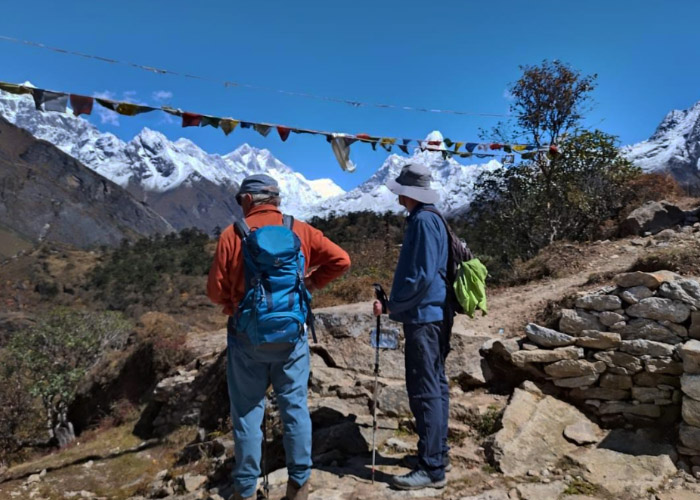
We have our breakfast and begin our trek with some climbs and descents, crossing the Dudh Koshi River via a famous Hillary suspension bridge. Slowly advancing into Sagarmatha National Park at Monjo, head towards Jorasale and carry on walking for the day until we reach the well-known Sherpa village of Namche Bazar. Today, our brief pause at Chautara reveals the stunning sights of snow-covered mountains beginning to come into view. We spend the night at Namche Bazar.
Day 5 : Namche Bazaar: Acclimatization-day (3,440m/11,280 ft): :
Today marks our initial acclimatization days. Proper acclimatization is crucial to prevent potential risks of acute mountain sickness or altitude sickness. During the acclimatization period, it is advised to engage in physical activities rather than merely resting. We will then take a brief hike around nearby Thame or just explore Namche Bazaar. We also have a unique opportunity to connect with fellow travelers and Everest climbers while observing the daily life of Sherpa locals. We will spend the night in Namche Bazar.
Day 6 : Namche Bazar – Tengboche (3,870m/12,694ft): 5 – 6 hrs:
After having our breakfast, we continue our journey to Tengboche with some breathtaking views of the Everest Himalaya ranges. We gradually make our way through the beautiful Everest Trekking trails. In our way, we can spot the alpine flora and fauna, have our lunch at Phuki Thega, and finally arrive at Tengboche at the end of the day. Arriving at Tengoche Monastery is a moment every trekker remembers. The monastery sits on a promontory with a 360° panoramic view of Ama Dablam, Everest, Lhotse, and Nuptse. As you arrive, the air is already filled with pre-festival energy, monks chanting, butter lamps flickering.
Day 7 : 27th Oct 2026 - Festival Day 1 – Wong (Blessing Ceremony) | Tengboche (3,870m / 12,694 ft):
After your breakfast at your tea house, the three public days of the Mani Rimdu Festival 2026 begin. This is the day the festival opens its doors to the public. Today, we witness the Sand Mandala created by the monks taking over 16 days using colored sand grains. The Head Lama distributes the sacred Mani Rimdu pills and Tshereel pills, offering direct spiritual protection and healing to everyone present. Not only the lamas but the entire Sherpa village dresses in traditional robes, proudly representing their culture. Pilgrims and visitors from around the world gather here to witness this sacred celebration.
Day 8 : 28th Oct 2026 - Festival Day 2: Cham (Masked dances) | Tengboche (3,870m / 12,694 ft):
Today, we go to observe the Monks wearing large painted masks and colorful costumes, performing sacred dances that tell the story of good defeating evil. Each dance sequence represents a different deity conquering demons. The dances also carry the teachings of Buddha on many levels. During the dance, the monks are believed to enter into a different state and become godlike beings.
Day 9 : 29th Oct 2026 - Festival Day 3: Jinsak (Fire Puja) | Tengboche (3,870m / 12,694 ft):
This day marks the last day of the festival. Today, we can observe monks placing the offerings into a sacred fire, burning all negative energy. The meticulously created sand Mandala is offered as a final offering and poured into the river. Sand is offered to the snake god Nagas, marking the end of the Mani Rimdu Festival.
In the evening, we can take a walk for the final visit to Tengboche Monastery for the breathtaking views of the highest peaks in the Earth.
Day 10 : Tengboche – Monjo (2,835 m /9,301 ft) :6-7 hrs trek:
After our breakfast at the tea house, we say goodbye to Tengboche Monastery and begin our descent back through the Dudh Koshi valley, taking a different trail from the one we used on the way up. The trail passes through Namche Bazar, where we have our lunch and do last-minute shopping for souvenirs. The path explores pine and rhododendron forests, crossing suspension bridges over the Dudh Koshi River. By evening, we arrive at the quiet, green village of Monjo, which gives us a kind of refreshment from the high-altitude terrain of the past several days.
Day 11 : Monjo-Lukla (2,860m/ 9,383 ft): 4-5 hr trek:
This day marks the last day of trekking on the Mani Rimdu Festival Trek. After our breakfast, we head towards the trail which passes through Dudh Koshi River, Sherpa villages, forests, and suspension bridges back to Lukla. Along the way, we pass the Pasang Lhamu Memorial that honors the first Nepali woman to summit Everest. Overnight stay at Lukla.
Day 12 : Lukla – Kathmandu (1,300m /4,264 ft): 40 min flight | Ramechhap (high season) – first priority Lukla direct / Kathmandu to Ramechhap (drive) then flight to Lukla :
Today we finally return to Kathmandu. We board the morning flight from Lukla back to Kathmandu. This 40 min flight offers you the last glimpse of Ama Dablam, Everest, and Lhotse. After you arrive in Kathmandu, you can rest or explore Thamel or Kathmandu city.
A farewell dinner marks the end of your trekking journey in Nepal.
Note: Since, Lukla is at a very high altitude, the weather forecasting are not very accurate and reliable. So, it is better to have a buffer day.
Day 13 : Departure from Kathmandu:
Based on your flight time, our team will drop you off at the airport and offer our final farewell to you. As you leave Nepal, you will hold more than just memories.
Price Includes
- Airport Pick-up and Drop service (International and Domestic)
- 3 nights Hotel in Kathmandu (Hotel Green Horizon or similar standard)
- All accommodation during the trek in the best hotels/tea houses in the area (differing according to the price you wish to spend)
- Sanitation: The accommodation we provide will be neat and clean with warm hospitality and quality services.
- Single/Twin-sharing Accommodation (as per budget): Your group won’t have to share your accommodation with anyone else so your privacy is protected.
- All foods during the trek: Breakfast, Lunch, and Dinner; any items on the menu as much as you wish to consume.
- We provide hygienic and safe meals to re-energize you.
- We request you not to waste your meals for it is difficult to transport food in the rural area.
- You are not allowed to share your meals with anyone else from another group.
- Transportation costs: Domestic flights (Kathmandu – Lukla – Kathmandu) and all required land transportation.
- Note: During High season, the flights to Lukla might not be available. We take an alternative route, which follows the route from Kathmandu to Ramechhap and then take a flight to Lukla.
- Professional and highly experienced English-speaking Trekking Guide licensed by the Government. Including their lodging and food.
- Local Staff: Our guides are locals of the region, which ensures that you will surely get to explore a bit more during the trek than with any other guides.
- Experienced: With the experience of more than two decades of working in this field, our trekking guides possess excellent knowledge of briefing during the trek as well, and they are experts in handling all kinds of critical situations that might occur during the trek.
- Insurance: Nepal Mountain Trekkers have an insurance policy for all our trekking staff.
- Porters (1 porter for 2 trekkers with a max load of 25 KG). Including their lodging and food.
- Local Staff: The porters we hire belong to the same region where we trek in order to provide employment opportunities to the locals as well as to make you explore every prospect of the region.
- Trekking permits: TIMS card, Khumbu Pasang Lhamu Rural Municipality Tax, and Sagarmatha National Park fees
- First aid medical box
- Trekking gear like sleeping bags and down jackets are made available for rent
- 13% VAT and 10% service charge
- Farewell Dinner
Price Excludes
- Visa fee to enter Nepal (Visa Information)
- International flight tickets and extra baggage charges
- Food in Kathmandu
- Extra night accommodation and meal costs in Kathmandu due to any change in the scheduled itinerary
- Travel insurance/ Rescue operation costs
- All personal expenses
- Tip for guide and porters
Trip Gallery
Equipments
 HEAD
HEAD
- Sun hat or scarf
- Light balaclava or warm fleece hat
- Sunglasses
- Head Torch
- Suncreams(40+) and Lip Balms
UPPER BODY
- Cotton t-shirts and thermals
- Fleece jacket
- Waterproof jacket
- Down jacket
LOWER BODY
- Lightweight cotton pants (long)
- Waterproof pants
- Inner thermals
FEET
- Thin inner socks (3 pairs)
- Thick, warm wool hiking socks
- Comfortable hiking boots
- Shower sandals
HANDS
- Gloves (Cotton and Waterproof)
- Creams
- Sanitizer
ACCESSORIES
- Sleeping bag rated to -10°C +
- Trekking bag (Rucksack)
- Duffel bag
- Large plastic bags (for keeping items dry inside trek bag)
- Trekking poles (optional, recommended)
- Water bottle or camel bag
- Toiletries and Tissue Papers
FIRST AID KITS
- Personal Regular Medicines
- Knee Caps
- Bandages
- Ointments
- Blister Tape
MISCELLANEOUS
- Medicines: We recommend you bring your regular medicines; we will provide a first aid kit from our side.
- Light-weighted Towel
- Swiss Knife
- Passport and extra passport photos
- Water Purifying Iodine Tablets, Drop or Sterilizer
Related Trips
You will also like …
Tiji Festival Trek – Upper Mustang
- 18 Days
- Leisurely Plus
Everest View and Sherpa Culture Trek
- 13 Days
- Moderate
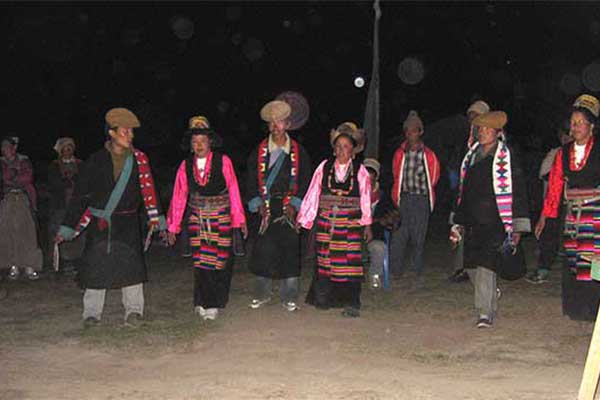
Langtang Tamang Heritage Trek
- 12 Days
- Moderate
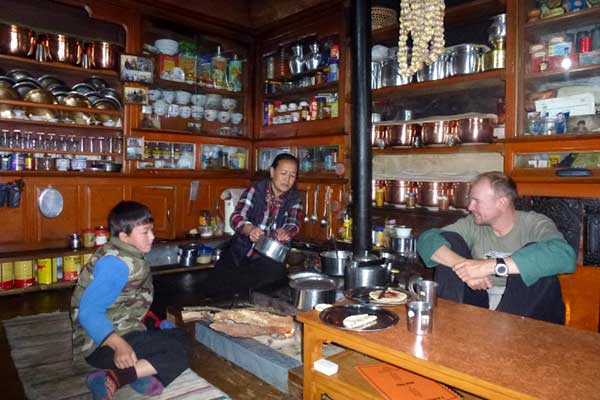
Helambu Cultural Trek
- 8 Days
- Moderate