Archives: Treks and tours
2026
Mardi Himal Base Camp with Muldai View Point, Chitwan, and Ghorepani Trek
The Mardi Himal Base Camp with Muldai View Point, Chitwan, and Ghorepani Trek is a journey that brings together the wildlife, mountains, and culture of Nepal in one unforgettable adventure. Feel the thrill of a Chitwan Jungle Safari, encounter the warmth of Tharu culture and tradition, and then trade the lowland jungle for the breathtaking trails of the Mardi Himal Base Camp Trek. Explore the traditional Gurung heritage and mountain lifestyle of Ghandruk on the Ghandruk Trek, stand above the clouds at Muldai View Point, and witness unforgettable Himalayan sunrises on the Ghorepani Poon Hill Trek, with scenic trails beautifully lined with vibrant rhododendron forests. From dense forests and peaceful villages to towering peaks and golden dawns, every step reveals a different side of Nepal. More than just a trek, this is a journey filled with adventure, connection, and memories that stay long after the mountains disappear from view.
Chitwan
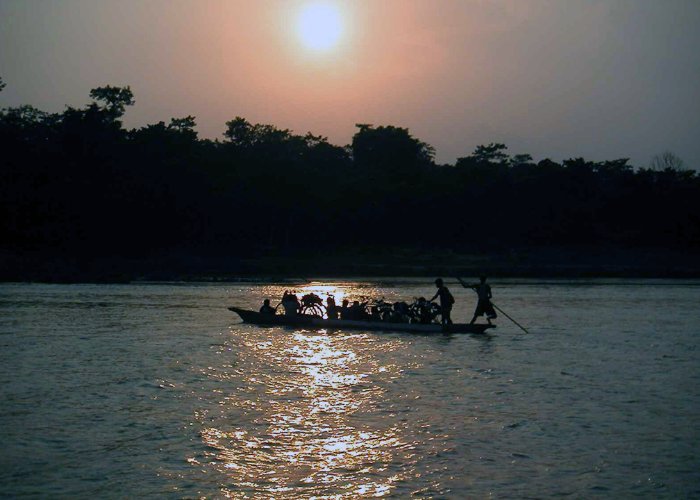
Immerse yourself in the Chitwan Jungle Safari, an adventure through a vast sanctuary of raw wilderness where lush forests and winding rivers shelter one of the world’s last strongholds of the magnificent one-horned rhino. Step into Nepal’s first national park (Chitwan National Park) and UNESCO World Heritage Site—spanning 952.63 km² of rich forests, grasslands, wetlands, and river valleys. From canoe rides along the river to crocodile spotting, Chitwan offers you a unique mix of thrill with joy. Take a guided jungle walk, enjoy birdwatching, and keep an eye out for rhinos, deer, monkeys, and other wildlife. You can also experience elephant bathing (optional) or choose a Jeep safari or elephant safari for deeper exploration of the jungle. Along the way, explore the Tharu community, where local traditions, daily life, and ecoculture add a unique cultural touch to your jungle adventure.
If you are specifically looking for the Chitwan Jungle Safari, you can find a dedicated itinerary for it available on our website.
Mardi Himal Base Camp Trek
The Mardi Himal Base Camp Trek winds through lush rhododendron forests, alpine meadows, and spectacular mountain landscapes. Upon reaching Mardi Himal Base Camp at 4,500 meters, you can enjoy breathtaking views of Annapurna, Machhapuchare (Fishtail), and Mardi Himal via a non-technical walking trail. Locals regard Machhapuchare (Fishtail) as a sacred home of Lord Shiva, adding a spiritual touch to the journey. Along the way, experience the warm hospitality and traditional lifestyle of Gurung and Magar cultural villages, offering a glimpse into the rich mountain culture of Nepal.
If you are specifically looking for the Mardi Himal Base Camp Trek, you can find a dedicated itinerary for it available on our website.
Ghandruk Trek
The Ghandruk Trek is a short and easy trekking adventure in Nepal’s popular Annapurna region, making it an excellent choice for families, children, and elderly travelers. The trek offers spectacular views of the Annapurna Himalayas while providing an authentic insight into the rich Gurung culture, traditions, and lifestyle. Along the trail, trekkers can also encounter diverse flora and fauna amid beautiful mountain landscapes. Also known as Ghandruk Homestay Trek or Ghandruk Cultural Trek, this journey is ideal for those seeking a relaxing and culturally immersive experience.
If you are specifically looking for the Ghandruk Trek, you can find a dedicated itinerary for it available on our website.
Muldai View Point Trek
The Maldai View Point Trek is a newly introduced trekking route that features breathtaking views of Annapurna and Dhaulagiri ranges. This trek is suitable for all trekkers and beginner friendly. The Maldai View Point trekking trail is located in the Annapurna Conservation Area, the largest conservation protected area. The highlight of trek is that it features spectacular views of the Himalayas, including the Annapurna, Dhaulagiri range, Lamjung, Fishtail, and Gangapurna.
Ghorepani Poon Hill Trek
Ghorepani Poon Hill Trek is one of the most popular short and easy treks in the Annapurna region of Nepal and doesn’t require any prior experience. The trek offers panoramic views of the stunning Annapurna and Dhaulagiri Range, including Machhapuchhre (Mount Fishtail), Hiunchuli, Annapurna South, Bharha Chuli, Nilgiri South, Tukuche Peak, and Mount Dhaulagiri. Along the trail, you pass through beautiful rhododendron forests and charming Gurung and Magar villages. The highlight is Poon Hill (3210 meters), where you can enjoy the spectacular first rays of the sun touching the snow-capped mountains.
If you are specifically looking for the Ghorepani Poon Hill Trek, you can find a dedicated itinerary for it available on our website.
When Is the Best Time for the Mardi Himal Base Camp with Muldai View Point, Chitwan, and Ghorepani Trek?
Autumn (September to November) is the best time for the Mardi Himal Base Camp with Muldai View Point, Chitwan, and Ghorepani Trek. If this time is not suitable for you then Spring (March to May) is a great alternative for this trek.
How Difficult is the Mardi Himal Base Camp with Muldai View Point, Chitwan, and Ghorepani Trek?
The Mardi Himal Base Camp with Muldai View Point, Chitwan, and Ghorepani Trek is of Moderate Difficulty.
One notable point is that there will be huge change in altitude from 100m to 4500 m within the span of 1 week.
How much does the Mardi Himal Base Camp with Muldai View Point, Chitwan, and Ghorepani Trek Cost?
The Mardi Himal Base Camp with Muldai View Point, Chitwan, and Ghorepani Trek costs USD 1,275 per person.
Why Choose the Mardi Himal Base Camp with Muldai View Point, Chitwan, and Ghorepani Trek?
All-in-one Nepal experience: This trek combines jungle wildlife safari, high-altitude trekking, and authentic cultural experiences in a single journey, ideal for travelers who want variety instead of a single-focus trip.
Diverse landscapes and Cultures: This trek features journey from the lowlands of Chitwan National Park (100m) to high Himalayan terrain of Mardi Himal Base Camp (4500m). This trek offers you an experience of wide variety cultures residing across the different terrains of Nepal.
Mountain Panoramas: This trek offers you the dazzling beauty of Annapurna, Dhaulagiri, Machhapuchhre (Fishtail), Hiunchuli, Annapurna South, Lamjung, Gangapurna, Bharha Chuli, Nilgiri South, Mardi Himal, and Tukuche Peak from Mardi Himal Base Camp, Muldai View Point, and Poon Hill.
Great value for money for a multi-destination trip: At USD 1,275 per person, this 19-day package covers a jungle safari, high-altitude trek, and two scenic viewpoints, offering more experiences per dollar than booking each trip separately
Permits Required for the Mardi Himal Base Camp with Muldai View Point, Chitwan, and Ghorepani Trek
The Permits Required for this trek are:
Annapurna Conservation Area Permit – 20 $ to 30 $
Chitwan National Park entry – 10 $ to 15 $
TIMS (Trekkers’ Information Management System)
2026
Dhorpatan Hunting Reserve Trek 2026/2027
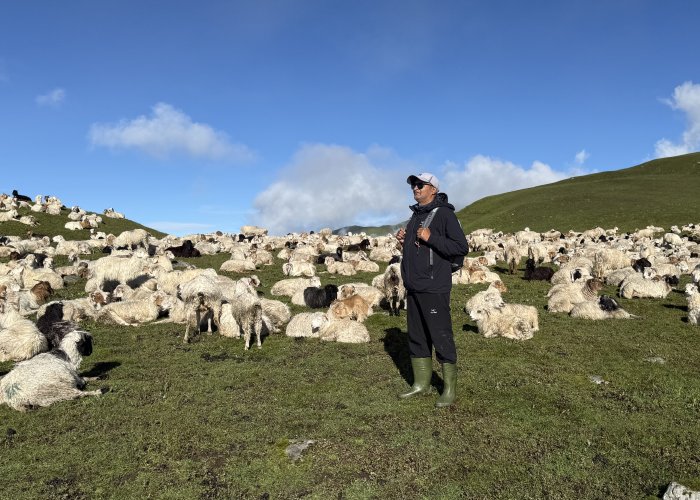
The only trek that winds through Nepal’s one and only hunting reserve, beneath the majestic Dhaulagiri Range, leads to the hidden Dhorpatan Village—where untouched wilderness, rich culture, and breathtaking Himalayan landscapes come together in one unforgettable journey: the Dhorpatan Hunting Reserve Trek. Far from the crowded trails of Everest Base Camp and Annapurna Base Camp, this trail promises to capture your heart with the raw, untouched beauty of Dhorpatan.
Dhorpatan Hunting Reserve | Nepal
Situated in the western hills of Nepal, spanning across three districts—Eastern Rukum, Myagdi, and Baglung—and nestled within the majestic Dhaulagiri Mountain Range, lies the Dhorpatan Hunting Reserve. Established in 1983 by the Government of Nepal, it was officially declared the country’s only hunting reserve in 1987.
Unlike Nepal’s national parks, such as Chitwan, Sagarmatha, and Langtang National Park, where hunting is prohibited, Dhorpatan uniquely combines conservation with strictly regulated trophy hunting. The revenue generated from hunting licenses helps support wildlife conservation and protect the surrounding ecosystem, while strict regulations help prevent illegal hunting and poaching.
Flora and Fauna of Dhorpatan
Nestled below the Dhaulagiri range, Dhorpatan packs forests, grasslands, and the snowline into a single reserve, with plant and animal life changing as the altitude rises. From pine, fir, and rhododendron forests to high alpine patans, the area supports rare wildlife such as blue sheep (bharal), Himalayan tahr, musk deer, and red pandas.
Flora:
58 recorded plant species, including 36 endemic flowering plants. Notable species:
- Rhododendron — Nepal’s national flower, covers mid-hill slopes in spring
- Himalayan oak and birch — form the dense mid-hill forest canopy
- Fir, pine, hemlock, juniper, spruce — dominate the colder, higher forest belt
- Alpine grasses (Kobresia, Carex) — cover the high-altitude meadows above 4,000m, grazed by blue sheep and livestock
Fauna:
18 mammal and 137 bird species, anchored by one defining predator-prey pair. Notable species:
- Blue sheep — the reserve’s signature species and its most hunted animal
- Snow leopard — its main predator, rarely sighted
- Himalayan tahr — the only other legally huntable species, hunted far less often than blue sheep
- Red panda, musk deer, black bear — protected, rare sightings
- Danphe and cheer pheasant — flagship birds among 137 species
Note: Blue sheep and Himalayan tahr are the only two species legally huntable in Dhorpatan — everything else in the reserve is protected.
Dhorpatan Village: A Culturally Enriched Village
Dhorpatan Village sits at around 2,850–2,900m, serving as the Dhorpatan Hunting Reserve’s headquarters. What makes it culturally rare isn’t just its remoteness—it’s the fact that two entirely distinct spiritual traditions have coexisted here, side by side, for over six decades: the indigenous Kham Magar and Tibetan refugee communities. Walking through the village, this harmony can be seen everywhere—Buddhist prayer flags and monasteries can be found alongside traditional shamanic rituals and Hindu festivals, showing how different beliefs and traditions peacefully coexist all within a single community. Few places in Nepal pack this much distinct cultural and religious heritage into one village, making Dhorpatan village a beautiful example of religious tolerance and rich culture.
Kham Magar
The indigenous Kham Magar of Dhorpatan follow a transhumant pastoralist lifestyle, seasonally moving their livestock between high-altitude valleys and lower settlements. Their spiritual life is deeply rooted in Shamanism—healing and spirit communication—and Animism, the belief that natural objects and elements possess spiritual souls. At the heart of these traditions are Dhami-Jhakri, spiritual healers who perform rituals to honor nature and ancestors, reflecting the Kham Magar’s close spiritual connection with their surroundings.
Tibetan Refugee
The Tibetan refugee settlement of Dhorpatan, established after the 1959 Tibetan exodus, is home to a Bonpo community that preserves the Bon religion through its monastery and traditional spiritual practices. The settlement also maintains traditional Tibetan medicine and a living tradition of wool weaving and handicrafts, keeping its cultural heritage alive.
When is the best time to Trek in Dhorpatan?
The best time for the Dhorpatan Trek is considered to be spring (March–May) and autumn (September – November). These two seasons provide us with the most stable weather and least challenges while trekking in Dhorpatan.
Can you trek to Dhorpatan during monsoon (June–September)?
Yes — Dhorpatan is an underrated option for the monsoon season. Its partial rain-shadow location means less heavy rain, landslides, and leeches than many other trekking areas. During this time, the high alpine meadows (patans) turn lush green and fill with wildflowers, making it a great choice for trekkers looking for beautiful landscapes. However, road conditions can be comparatively difficult during this season.
What is the duration of the Dhorpatan Hunting Reserve Trek?
The duration of the Dhorpatan Trek depends on your chosen itinerary and can range from 6 to 15 days, or even less depending on your schedule. The itinerary can also be customized to suit your needs and preferences.
How difficult is the Dhorpatan Hunting Reserve Trek?
The Dhorpatan Trek is considered beginner to intermediate in difficulty. It is suitable for trekkers with a basic level of fitness and preparation. The trek reaches a maximum altitude of around 4,190 m at Tikadhara, the highest point on the route.
How to Get to Dhorpatan from Kathmandu?
There’s no direct road to Dhorpatan, so you have two ways to reach it — a budget road route and a faster flight-assisted route.
Quick answer: The standard route is Kathmandu → Pokhara (bus, 6–7 hrs) → Burtibang (bus, 6–7 hrs) → Dhorpatan (4WD, 5 hrs) over 2 days. The fast route swaps the first bus for a 25–30 min flight, making it doable in a single day.
Option 1: Standard Route (By Road) — Budget-Friendly
- Kathmandu to Pokhara by bus — 6 to 7 hours (traffic-dependent) | Overnight stay in Pokhara
- Pokhara to Burtibang by bus — 6 to 7 hours | Burtibang to Dhorpatan by 4WD — 4 to 5 hours (rough road conditions)
Total: 2 Days
Option 2: Fast Route (By Air) — If You’re Short on Time
- Kathmandu to Pokhara by flight — 25 to 30 minutes | Same day: Pokhara to Burtibang by bus | Burtibang to Dhorpatan by 4WD — 4 to 5 hours
Total: 1 Day
Note: The Route and Itinerary can be modified to suit your desires.
Why Choose the Dhorpatan Hunting Reserve Trek Over Other Treks?
Unlike the Langtang Valley Trek or Manaslu Circuit, which have well-established trails and attract many international trekkers, the Dhorpatan Hunting Reserve Trek remains one of Nepal’s truly off-the-beaten-path treks. Here’s what makes it different:
- Only hunting reserve trek in Nepal — the only trek in Nepal that passes through a legally designated hunting reserve, offering chances to spot rare wildlife such as blue sheep and snow leopards.
- Wildlife meets culture — a unique mix of wildlife and cultural trekking, passing through landscapes shared by Kham Magar and Tibetan refugee communities.
- Peaceful and uncrowded — the reserve sees only around 100 foreign visitors a year, so the trail still feels quiet and less commercialized rather than crowded.
- Hidden and untouched trails — a lesser-known trekking route through remote forests, alpine meadows (patan), and natural landscapes, far from the busy tourist trails.
Permits Required for the Dhorpatan Hunting Reserve Trek
The following are the required permits for the Dhorpatan Hunting Reserve Trek:
- Dhorpatan Hunting Reserve entry fee – $20 per person
- TIMS (Trekkers’ Information Management System) card
Note: For price details, please feel free to contact us.
Dhorpatan Hunting Reserve Trek Itinerary Options
Here are Our two most popular itinerary options for the Dhorpatan Hunting Reserve Trek, so you can pick the one that fits your schedule:
- 6-Day Express Itinerary — for trekkers short on time. Uses the flight route in and out, and skips Kathmandu sightseeing and the Dhorpatan rest day.
- 10-Day Classic Itinerary — the complete experience. Includes Kathmandu sightseeing, a rest day in Dhorpatan, and the full Bukipatan–Tikadhara route.
6-Day Express Itinerary
Day 1: Arrival in Kathmandu
Day 2: Kathmandu to Dhorpatan
- Kathmandu to Pokhara | 25 to 30 min flight
- Pokhara to BurtiBang | 6 to 7 hrs drive
- BurtiBang to Dhorpatan | 4-5 hrs drive via 4WD
Day 3: Dhorpatan to Bukipatan | 5-6 hrs hike
Day 4: Bukipatan to Tikadhara and back to Dhorpatan | 7-8 hrs hike
Day 5: Dhorpatan to Kathmandu
- Dhorpatan to Pokhara | 8 to 9 hrs drive
- Pokhara to Kathmandu | 25 to 30 min Flight
Day 6: Departure Day
2026
Mani Rimdu Festival Trek 2026 | Everest Khumbu Cultural Trek
Mani Rimdu Festival Trek: A Trek highlighting the rich Sherpa Culture
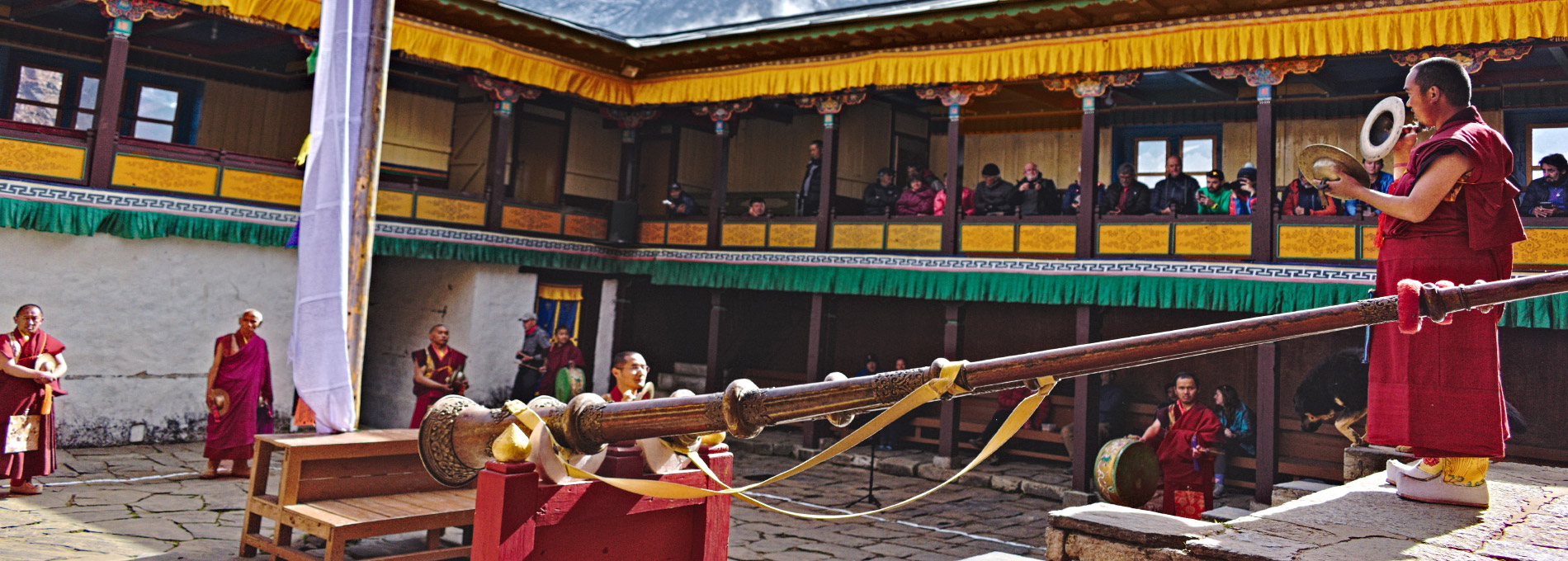
The Mani Rimdu Festival is one of the most sacred and culturally significant festivals for the Sherpa people of Nepal. This festival is held every year at Tengboche Monastery, located in the Everest Region. This festival is celebrated at 3,780m above sea level.
In 2026, the Mani Rimdu Festival dates are October 26-28. These three days are a part of the 19-day monastic ritual cycle. These three days coincide with the full moon of the 9th Tibetan Month.
The Mani Rimdu Festival Trek offered by Nepal Mountain Trekkers mixes the Everest region trekking with the rich Sherpa culture. Unlike typical Everest Base Camp Treks, this Trek offers you the opportunity to explore the soul of the Khumbu region.
Why is the Mani Rimdu Festival celebrated?
Mani Rimdu is the most sacred festival of the Sherpa people, celebrated at Tengboche Monastery to honor Guru Rinpoche and commemorate Buddhism’s victory over the ancient Bon religion. They perform masked cham dances, sacred blessings, and monks symbolically conquering evil, bringing spiritual protection and harmony to the world.
About Bon Religion
Bon (also known as Yungdrung Bon) is Tibet’s oldest religion, practiced long before Buddhism arrived. The Mani Rimdu festival celebrates the victory of Buddhism over Bon, marking a big shift in the spiritual history of the Himalayas. Guru Padmasambhava brought Buddhism to Tibet in the 8th century, and over time it replaced Bon as the main religion of the region.
When and where Mani Rimdu Festival celebrated?
The date falls on the full moon of the 9th Tibetan month, which in 2026 corresponds to October 26-28. The date of the celebration changes and is based on the lunar cycle. If you are planning in 2027, contact Nepal Mountain Trekkers for the most up-to-date schedule and to plan your trek accordingly.
In Tibetan Buddhism, the full moon holds deep spiritual significance. It is considered the most powerful and auspicious time for religious rituals and ceremonies. Celebrating the festival on the full moon amplifies the spiritual potency of every prayer, dance, and blessing performed.
The festival is primarily celebrated at Tengboche Monastery, located at 3,867 m above the Dudh Koshi valley in the Sagarmatha National Park, Khumbu, Nepal. The festival is also celebrated at Thame Monastery and Chiwong Monastery, though Tengboche remains the primary and most accessible celebration site for trekkers.
About Tengboche Monastery
Tengboche is the largest and most revered monastery in the Everest region, offering views of Ama Dablam and the Everest.The monastery is a spiritual heart of the Khumbu region, drawing both pilgrims and trekkers from around the world. It is also the main venue where the famous Mani Rimdu festival is celebrated every year.
What makes the Mani Rimdu Festival Special?
“Mani Rimdu” literally translates as Mani (jewel) + Rimdu (small sacred pill or cake), a reference to the spiritually blessed medicine pills distributed to devotees during the festival as a symbol of healing and protection.
The Mani Rimdu Festival spans 19 days in total, 16 days of private monastic ceremonies, where monks prepare the spiritual energy. The 3 public days are them releasing it in the form of dances, blessings, fire puja, and the pills given to the devotees.
The 3 public days are:
Day 1- Wong (blessing Ceremony): The sacred Sand Mandala is revealed to the public at Tengboche Monastery. Monks perform prayers and rituals, distributing the blessed Mani Rimdu pills (spiritual medicine symbolizing protection and healing), to devotees and visiting trekkers alike.
Day 2- Cham (Masked Dances): The most iconic moment of the Mani Rimdu Festival. Monks dress in masks and costumes, performing the sacred Cham dance. They perform this to reflect the Buddhist gods defeating evil forces.
Day 3-Jinsak (Fire Puja): The Mani Rimdu Festival concludes with the sacred fire ritual at Tengboche Monastery. The crafted Sand Mandala is ceremonially dismantled, and its sand is offered to the river. Negative energies are symbolically burned away.
Why choose the Mani Rimdu Festival trek?
Mani Rimdu Festival trek is the only Festival trek in the Everest region. This trek is one of the best for culture lovers, Buddhist followers, and adventure enthusiasts wanting spiritual knowledge. It blends the ancient culture of Tibetan Buddhism with the breathtaking landscapes of the Himalayas.
Is the Mani Rimdu Festival Trek a Beginner-friendly Trek?
This trek is considered a moderate trek. Since its peak altitude is at Tengboche (3,870m / 12,694 ft), the elevation gain remains manageable compared to higher Himalayan expeditions. The trails in this trek are well-maintained, but there are a few steep climbs, which make this trek a bit harder for a beginner. However, it is suitable for someone with basic fitness and a steady pace, rewarding trekkers with breathtaking views of Everest, Lhotse, and Ama Dablam.
Why Trek with Nepal Mountain Trekkers?
Nepal Mountain Trekkers has experience of over two decades, we have been sending trekkers to the EBC, Mani Rimdu Festival Trek with experienced and licensed local guides.
Permits Required for this Trek
- Sagarmatha National Park
- TIMS (Trekkers’ Information Management System) card
- Khumbu Pasang Lhamu Rural Municipality Tax
2025
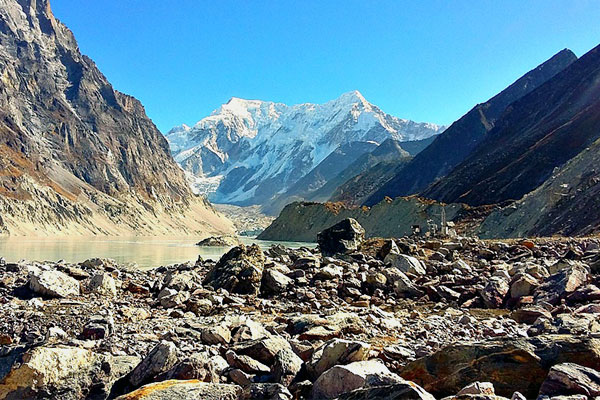
Tashi Lapcha Pass Trek – Rolwaling to Everest via One of Nepal’s Most Challenging Passes
Tashi Lapcha Pass Trek – Where Wilderness Meets the Everest Trail
Tashi Lapcha Pass Trek is one of Nepal’s most thrilling and least-traveled high-altitude adventures. It connects the mystical Rolwaling Valley with the legendary Khumbu (Everest) region, offering a raw and unforgettable Himalayan experience. This trek is perfect for seasoned trekkers and ambitious mountaineers who crave more than a typical trail.
From turquoise glacial lakes and soaring snow-capped peaks to quiet Sherpa villages and technical alpine crossings, the journey blends culture, challenge, and remoteness. Moreover, it’s an epic adventure in Nepal for anyone who seeks to escape the crowded trails and explore the hidden corners of the Himalayas.
Often overshadowed by the Everest Base Camp Trek, the Tashi Lapcha Pass route is a true gem. If you’re looking for off-the-beaten-path treks in Nepal, this one delivers solitude, endurance, and jaw-dropping scenery all the way through.
Where is Tashi Lapcha Pass and Why is it Special?
The Tashi Lapcha Pass, at 5,755 meters, sits at the border of Rolwaling Valley (Dolakha district) and the Khumbu region (Solukhumbu). Located just south of Mt. Pachermo (6,273m), this high alpine pass is guarded by towering glacial ridges of the Rolwaling Himal.
Furthermore, crossing this pass feels like a real Himalayan expedition. You’ll walk on ice, navigate loose moraines, and sometimes use ropes. For experienced trekkers and mountaineers, this offers a perfect mix of challenge and thrill.
The trail transitions dramatically—from forested hills and Buddhist villages in Rolwaling to massive glaciers and bustling Sherpa settlements in Khumbu. Consequently, it’s a unique cross-region trek that brings both serenity and adventure together.
Thinking of climbing? Check out our Rolwaling + Pachermo Peak Climbing package.
Route Overview: From Rolwaling to Khumbu
The trek begins in Simigaun, a hillside village in Dolakha. From there, you follow trails through rhododendron forests to Beding, a spiritual Sherpa village. As the trail continues, you move deeper into Rolwaling, reaching Na village and the stunning Tso Rolpa Lake, one of Nepal’s largest glacial lakes.
Afterward, the adventure intensifies as you climb toward Trakarding Glacier, preparing to cross the technical Tashi Lapcha Pass. The crossing itself is a highlight—icy paths, dramatic views, and a sense of real achievement. Eventually, after the pass, you descend into Thame and reach Namche Bazaar, the vibrant heart of the Khumbu region.
This journey blends the hidden tranquility of Rolwaling with the classic trekking atmosphere of Everest. Thus, it becomes a perfect Himalayan combo for serious adventurers.
Best Season for Tashi Lapcha Pass Trek
The best time to trek this route is from March to May and September to November. These months bring clear skies, stable weather, and better glacier conditions.
In contrast, avoid trekking during June to August, as monsoon rains can make trails slippery and limit visibility. Likewise, December to February brings extreme cold and deep snow—crossing the pass can be dangerous or even impossible.
For more remote treks in these seasons, also explore our Pikey Peak Trek and Dudh Kunda Trek.
Difficulty Level and Required Fitness
The Tashi Lapcha Pass Trek is classified as strenuous. This trek includes high altitudes (up to 5,755m), long trekking days (6–8 hours), and glacier crossings. As a result, you need excellent physical fitness, good stamina, and ideally, previous experience above 4,000m.
Technical sections—especially around Trakarding Glacier and the pass—may require crampons, ropes, or an ice axe. Fortunately, our expert guides and full crew provide all necessary support, training, and equipment.
This trek is not recommended for beginners. However, for adventure lovers, it’s one of the most rewarding challenges Nepal offers.
Permits and Logistics
To complete this trek, you’ll need a combination of trekking and climbing permits:
- Gaurishankar Conservation Area Permit (GCAP)
- Sagarmatha National Park Permit
- TIMS Card (Trekkers’ Information Management System)
- Pachermo Peak Permit (if climbing) – by Nepal Mountaineering Association
Thankfully, all permits are included in our package. We handle the paperwork so you can focus on the adventure.
Accommodation and Meals
From Simigaun to Na, basic teahouses are available. From there on, the trek enters full wilderness mode. Between Na and Thame, we provide fully supported camping with tents, kitchen staff, and nutritious hot meals.
Once you descend into Thame, Namche, and Lukla, you’ll stay in cozy mountain lodges with standard facilities. Moreover, meals include dal bhat, pasta, soups, potatoes, rice, tea, and energy-rich snacks to fuel your trek.
Extend Your Adventure
Want to level up the challenge? Pachermo Peak Climbing (6,273m) is a perfect summit to add after the pass. It’s non-technical but high in elevation, ideal for acclimatized trekkers.
Alternatively, after reaching Lukla, you can join our Island Peak Climb, trek to Everest Base Camp, or continue the Classic Jiri to Everest trail for a longer Himalayan journey.
FAQs – Tashi Lapcha Pass Trek
❓ How safe is the Tashi Lapcha Trek?
It’s safe with proper guides, acclimatization, and gear. We follow safety protocols, carry rescue communication devices, and support you with trained mountain staff.
❓ How long does the trek take?
Expect 18–21 days depending on weather, acclimatization, and added climbs like Pachermo.
❓ Can a beginner join?
No, it’s best suited for trekkers with prior high-altitude experience and good fitness.
❓ Do I need insurance?
Yes. Your travel insurance must include emergency evacuation, altitude over 5,500m, and climbing coverage (if attempting Pachermo).
❓ What gear do I need?
Essential gear includes: a down jacket, sleeping bag (–15°C), trekking boots, microspikes, gloves, gaiters, headlamp, and glacier sunglasses. We send you a full list after booking.
Book Your Tashi Lapcha Trekking Adventure Today
The Tashi Lapcha Pass Trek is for those who crave real adventure. With Nepal Mountain Trekkers, you’ll enjoy expert planning, local insights, full safety support, and the freedom to push your limits.
So, are you ready for a challenge unlike any other? Contact us now and start planning your Tashi Lapcha journey today.
2025
Tiji Festival Trek – Upper Mustang
Introduction: Why Tiji Festival Is a Once-in-a-Lifetime Experience
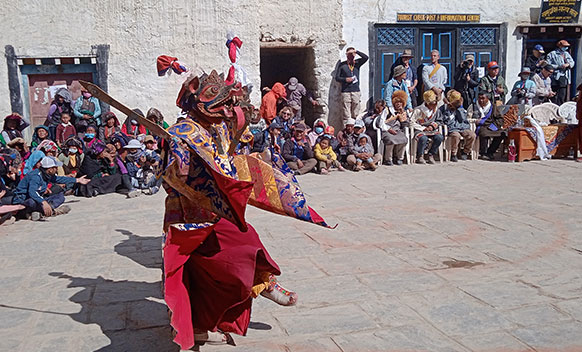
The Tiji Festival is one of the most vibrant and culturally significant celebrations in Nepal, held annually in Lo Manthang, the ancient walled capital of Upper Mustang. This three-day Tibetan Buddhist festival tells the story of Dorje Jono, a deity who saved Mustang from destruction by defeating a demon. With its dramatic masked dances, traditional rituals, and stunning Himalayan backdrop, the Tiji Festival is a rare opportunity to witness a centuries-old spiritual performance in a remote corner of the world.
In 2027, the Tiji Festival is scheduled to take place from 1st to 3rd June. Mark your calendar and prepare to trek deep into the Trans-Himalayan region, where Tibetan culture thrives untouched by modern influence.
Where Is the Tiji Festival Celebrated?
The Tiji Festival is celebrated in Lo Manthang, located in Upper Mustang, a restricted area of Nepal close to the Tibetan border. Whereas, Lo Manthang, the walled capital of Mustang, sits at an altitude of around 3,800 meters and is known for its whitewashed mud-brick palaces, centuries-old monasteries, and distinct Tibetan architecture.
What Makes Tiji Festival Special?
The word “Tiji” is short for “Tenchi,” which translates to “Prayer for World Peace.” The festival showcases sacred dances known as “Cham”, performed by monks of the Chhoede Monastery in Lo Manthang. Each day of the festival represents a different act of Dorje Jono’s legendary battle:
- Day 1 (Tsa Chham): The monks perform dances depicting the beginning of evil in the region.
- Day 2 (Nga Chham): The dances portray Dorje Jono’s attempts to defeat the demon.
- Day 3 (Rha Chham): Victory is declared as the demon is banished and peace is restored.
Surrounded by ancient monasteries and chanting lamas, the atmosphere is mystical, immersive, and unforgettable.
Tiji Festival 2027 Dates (and 2028)
The Tiji Festival 2027 will be celebrated from 1st to 3rd June 2027, as per the Tibetan lunar calendar. Similarly, for those planning ahead, the tentative dates for the Tiji Festival 2028 are May 21 to 23, 2028, though the exact dates are subject to confirmation by the local monks.
👉 Bookmark this guide or follow us for the latest updates on Tiji Festival Dates.
Detailed Itinerary – Tiji Festival in Upper Mustang
Your journey begins in Kathmandu, where you’ll arrive and take a day to explore iconic cultural landmarks such as Boudhanath and Swayambhunath. Afterward, a scenic flight or drive takes you to Pokhara, offering majestic views of the Annapurna range.
From Pokhara, a short flight to Jomsom kicks off the trek. Further on, you’ll start walking to Kagbeni, a windswept village that serves as the gateway to Upper Mustang. Continuing through barren cliffs and mystical valleys, you’ll pass through Chele, Syangbochen, and Ghiling, absorbing the raw beauty and distinct Tibetan culture along the way.
By Day 8 or 9, you’ll reach Lo Manthang, just in time for the opening ceremony of the Tiji Festival. Over the next three days, you’ll stay in Lo Manthang and witness each phase of the sacred masked dance. With deep chants, vibrant robes, and powerful drumbeats echoing through the Himalayan desert, the festival leaves a lasting impression on all who attend. After all, this is all about the Tiji Festival Celebration.
After the celebration, the return journey follows a different scenic route via Dhakmar and Ghami, known for red cliffs and ancient cave dwellings. Eventually, you’ll reach Jomsom and fly back to Pokhara, where a relaxing night awaits before concluding your trip in Kathmandu.
This 18-day journey is ideal for those seeking both cultural immersion and Himalayan trekking.
Permits Required for Upper Mustang Trek | Tiji Festival
As Upper Mustang is a restricted area, the following permits are essential for Upper Mustang Trekking:
- Upper Mustang Restricted Area Permit (RAP): USD 500 for 10 days (USD 50 per day for Upper Mustang Restricted Area Permit)
- Annapurna Conservation Area Permit (ACAP): NPR 3,000 (~USD 25)
- TIMS Card: Often included with agency packages
Best Time to Trek Upper Mustang
Regarding the best time to trek, the month of May is the best time to visit Upper Mustang for the Tiji Festival. The weather is dry, skies are clear, and the trails are less affected by the monsoon. Due to Mustang’s location in the Himalayan rain shadow, it receives very little rain, making it a great trekking destination even during the summer months. Hence, it is also one of the best monsoon trekking destinations in Nepal. But since we are planning the Upper Mustang Trek to coincide with the Tiji Festival, it is better to plan during May-June.
How Difficult Is the Upper Mustang Trek?
The Upper Mustang trek is a moderately difficult trek. While you don’t need mountaineering experience, you should prepare yourself for long trekking days and high-altitude conditions. The highest elevation on the trail is around 4,200 meters, and you’ll walk for 5–7 hours daily. With proper acclimatization and support, most healthy individuals can complete the trek.
However, with access to roads for almost the entire trail of Upper Mustang Trekking, nowadays, most people prefer a Jeep Tour to Upper Mustang. This way, even those who are on short holidays can explore Upper Mustang and even the Tiji Festival Celebration.
How Much Does the Upper Mustang Tiji Festival Trek Cost?
The prices for trekking to Upper Mustang can vary depending on service level, itinerary, and group size. However, on average, the basic cost of trekking to Upper Mustang is about:
- Standard Group Trek: USD 2,000 – 2,400 per person
- Private/Customized Trek: USD 2,500 – 3,000
- Luxury Jeep Tours: USD 3,000 and above
These typically include permits, domestic flights, guides, accommodation, meals, and festival access. Nonetheless, the exact cost will depend upon your itinerary, requirement of porters, transportation uses, standard of accommodation etc. Therefore, get in touch with us for an exact quotation of Upper Mustang Trekking with Tiji Festival Celebration.
Why Trek to Upper Mustang with Nepal Mountain Trekkers?
At Nepal Mountain Trekkers, we’ve been leading treks to Upper Mustang and the Tiji Festival for over a decade. Our guides are local experts, fluent in the history, rituals, and landscapes of Mustang. We ensure all logistics – permits, accommodations, guides, transportation – are handled smoothly, so you can enjoy the celebration stress-free.
Tiji Festival 2027 Awaits You
The Tiji Festival Trek is the perfect blend of culture, adventure, and ancient spirituality. From the dusty trails of Upper Mustang to the sacred courtyard of Lo Manthang, every step brings you closer to understanding a hidden world. Whether you’re searching for “Tiji Festival 2027 dates,” “Upper Mustang trek itinerary,” or “best time for Mustang trek,” this guide has you covered.
Book now with Nepal Mountain Trekkers and secure your place for one of the most unique Himalayan festivals on Earth.
2025
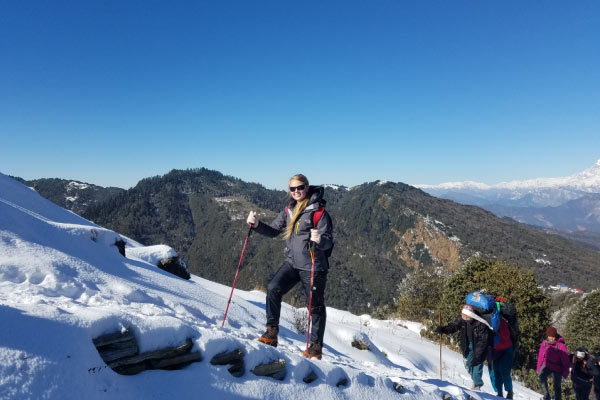
Ghorepani Poon Hill trek from Pokhara with Ghandruk
The Ghorepani Poon Hill Trek near Pokhara stands as one of the most well-loved short trekking routes in the Annapurna region of Nepal, especially famous for the breathtaking sunrise views from Poon Hill. This trek is much preferred by beginners and nature admirers. The Annapurna region always gives travelers an amazing chance to uncover Nepal’s hidden beauty, including panoramic views of the Annapurna and Dhaulagiri Mountain ranges.
For those looking for a trek with a blend of culture, natural scenic beauty, and adventure, then get ready for the Ghorepani Poon Hill trek with Ghandruk from Pokhara. This option from Pokhara to Pokhara is perfect for those who have limited time and fewer days to travel. So, the Ghorepani Poon Hill trek with Ghandruk from Pokhara is widely popular among these travelers, as it is one of the short treks near Pokhara.
Easy Trek in Nepal with Stunning Rhododendron Forest Trails
The Poon Hill trek is ideal for those wanting an easy trek in Nepal while still providing spectacular mountain views. Starting from Pokhara, this colorful hike takes you through Nepal’s largest rhododendron forest, located in the Annapurna region. One of the key advantages of this journey is its short timeframe—the trek usually lasts 3 to 5 days, depending on your Ghorepani Poon Hill Trek itinerary. Travelers have the option to either trek the whole way or book a private jeep up to Ghandruk and Ghorepani Poon Hill.
Best Time for Ghorepani Poon Hill Trek – Spring and Autumn Seasons
Among the travelers’ FAQs about Ghorepani is the best time for the Ghorepani Poon Hill Trek, and the answer is during spring (March–May), when colorful rhododendrons make nature come alive. Meanwhile, doing the Poon Hill Trek in autumn eases your trek with clear skies and suitable trekking temperatures—this is why it’s one of the best seasons for the Ghorepani Trek.
Experience Culture and Scenic Beauty in Ghandruk Village
In the journey, trekkers can enjoy rich culture in Ghandruk with warm local hospitality and scenic views of the Himalayas from Poon Hill with colorful rhododendrons along the trail. The Ghorepani Poon Hill trek with Ghandruk is a fantastic option to spend time with friends and families. Each day, this trek includes an average hike lasting 4 to 7 hours. In terms of difficulty, the Ghorepani Trek is rated as easy compared to others, making it a standard pick for beginners, solo travelers, and small groups.
Permits and Conservation Rules for Ghorepani Poon Hill Trek
As Ghorepani Poon Hill lies inside the Annapurna Conservation Area, in order to complete this trek, all non-Nepali travelers must secure the required permits, i.e., the ACAP permit for the Ghorepani Trek and a TIMS card. The Annapurna Conservation Area is home to various types of forests—from deciduous to alpine and tropical—spread across different elevations. Interestingly, the highest recorded flowering plant is also found in this region. If you’re planning to do a rhododendron trek in Nepal, the Ghorepani Rhododendron Trek can be a great option.
Sunrise Views and Photography from Poon Hill – A Trekking Highlight
For those who loves to click photos, this trail is a dream come true. From Poon Hill, you can capture views of more than 12 peaks, making Ghorepani one of the top choices for an Annapurna sunrise trek. Overall, this trail offers something for everyone—a full package trek for anyone looking to spend time with nature.
7 best reasons to visit Ghorepani Poon Hill with Ghandruk
- There are countless reasons to explore Ghorepani Poon Hill, but here are the top highlights of the Ghorepani Poon Hill trek:
- Experience wonderful Himalayan sunrise and sunset views from Poon Hill, in between the Annapurna, Dhaulagiri, and other mountain ranges.
- Walk through Nepal’s largest rhododendron forest, especially colorful during the spring season.
- A short and sweet trek from Pokhara, great for beginners, families, and solo travelers.
- Click beautiful mountain photos with panoramic views of over 12 snow-capped peaks.
- Go through authentic Nepalese culture, especially the Gurung and Magar village life, with memorable cultural moments in Ghandruk village.
- Discover different biodiversity in the Annapurna Conservation Area, with different species, wildlife, and many more.
- Get a chance to visit the historic Ghandruk museum, with well-preserved Gurung culture and beautiful scenery of the Annapurna and Machhapuchhre mountain ranges.
2022
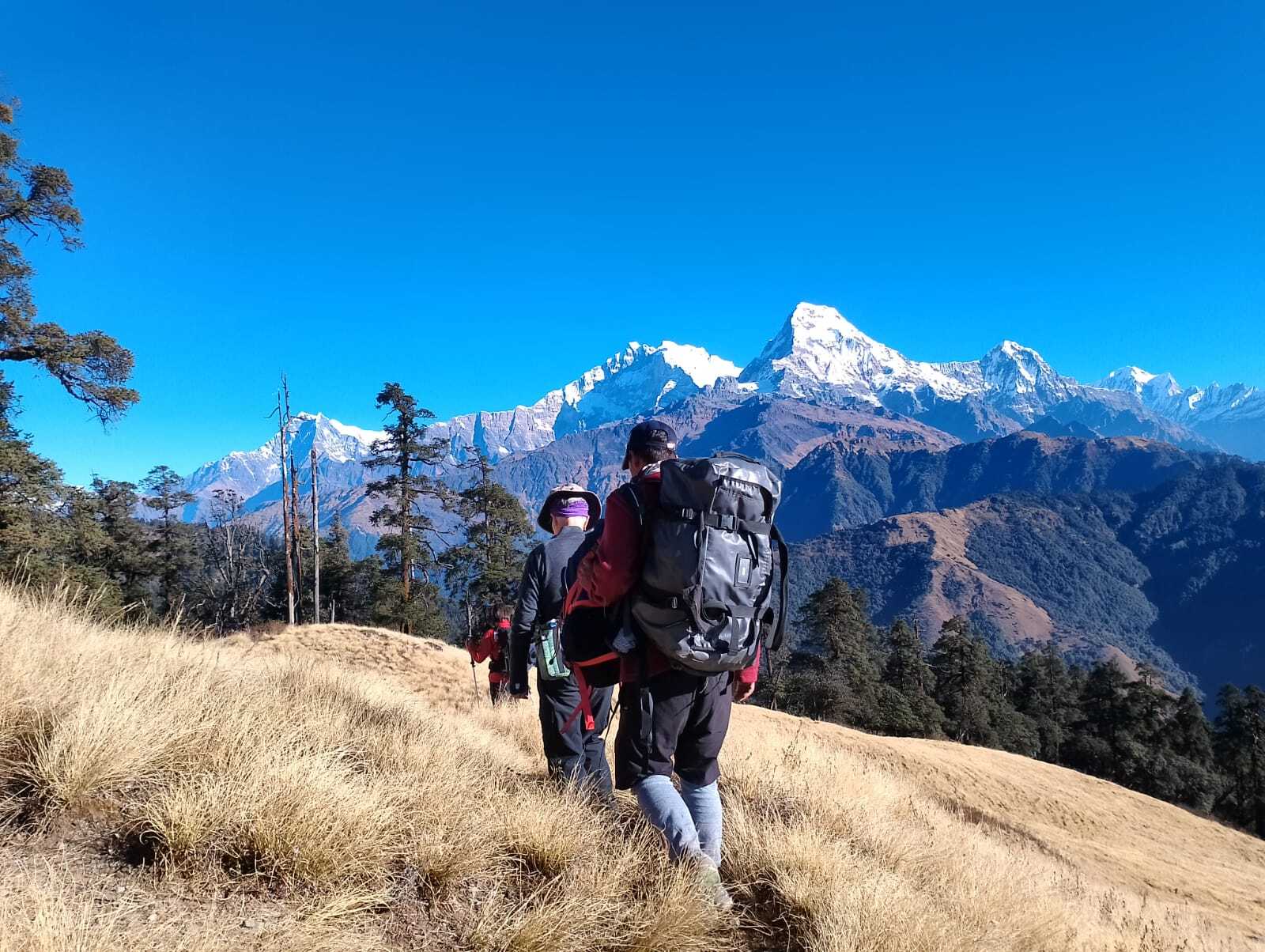
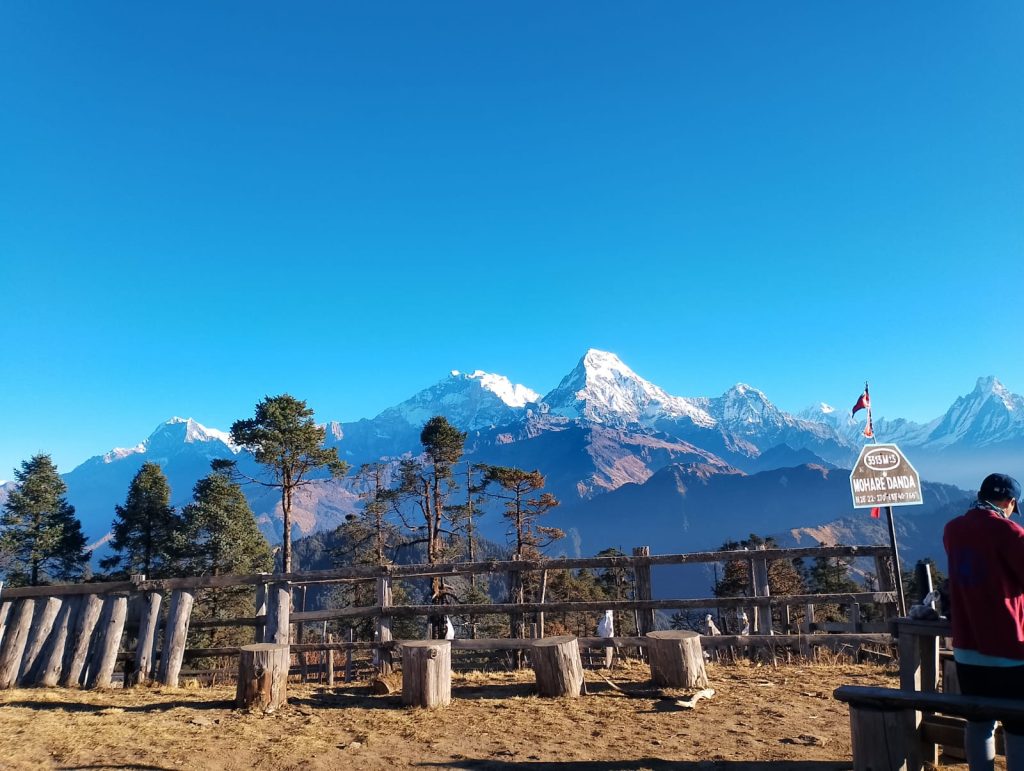
Mardi Himal with Mohare Danda Trek
Mardi Himal along with Mohare Danda Trek is one of the most popular treks in the spring season. The 17-day journey includes the magnificent Khopra Ridge and, by extension, the beautiful Mohare Hill, and the Mardi Himal Trek.
The panoramic view of the mountain adds to the attractiveness of this hike. The trail offers views of the mountains Annapurna, Dhaulagiri, Manaslu, and Mt. Fishtail. Alongside the sunrise and sunset view of Poonhill, Muldai Hill and Badal Danda are some of the main attractions. You will witness the rough trails, which will accompany the beautiful terrains, livestock, flora, and fauna.
Accommodation with sustainability
The Mardi Himal Trek with Mohare Danda Trek is more of a trek that honors the local community. In the Teahouse and community homestays, our excursion will be accompanied by the friendly services of the local hosts. Mohare Danda is a Sustainable tourism part of the trek. Having said that more of the local products are given priority. It will ultimately uplift the economic standard of the community. we will be experiencing more locally inspired cuisine, pleasant lodging, and attributes that will benefit the local community. It will ultimately uplift the economic standard of the community.
Short description: Mardi Himal with Mohare Danda Trek
The trek is significantly easier and of moderate difficulty because the altitude is not that high. The highest point of Mohare Danda is (3313m/10869 ft) and the Mardi Himal Base Camp is (4500m/14764 ft) above sea level. Our tour will begin in Pokhara, from which you will begin your walk to Mardi Himal Base Camp via the Deurali, Forest Camp, and Badal Danda routes. From The Mardi Himal Trek, we head towards Mohare Danda; Landruk- Chummrung- Tadapani- Munde View point-Swatha- Mohare Danda.
Mohare Danda adjoining the Mardi Himal trails covers the popular Annapurna Region. This trek best fits travelers who want to avoid a huge crowd. A little prior trekking experience will be sufficient to complete this excursion. The primary goal of this expedition is sustainability, which will progressively improve the neighborhood.
2021
Bethanchowk Narayanthan 1 night 2 days
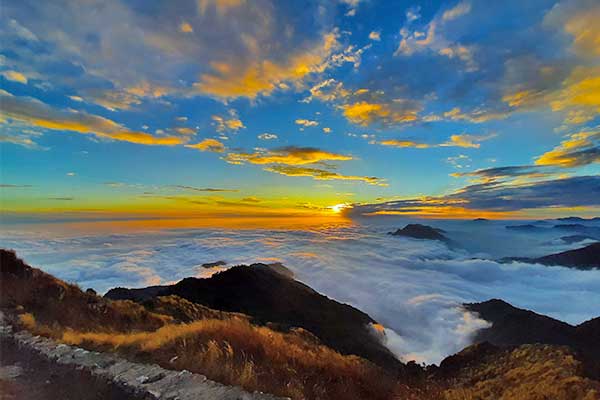
Bethanchowk – the king of the hills is one of the best nearby destinations for trekking and camping lovers who are looking for a short yet worthwhile and budget-friendly hiking and camping spot close to Kathmandu Valley. This is the highest hill in the Mahabharat range; located in the southern part of the Kavre district. At an elevation of 3,000m above sea level, astounding and breathtaking vistas encircle the Bethanchowk ridge.
The vistas from the top of Bethanchowk Hill are just beyond explanation. As we would be sighting it from above the clouds; the dramatic movements of clouds wandering and the mesmerizing sunset are the major highlights of this trek. Whereas, the mountain ranges from east Makalu to Dhaulagiri in the west can be sighted from Bethanchowk. The sunrise view and the mountain ranges from Bethanchowk early in the morning are remarkable as well.
Bethankchowk Narayanthan: Story behind its name
Besides, this place has a religious significance as well. The actual name of this place is Bethanchowk Narayanthan. Named after the name of the Narayan temple on the top of this ridge. Likewise, there’s a belief that Lord Shiva himself resides here on this ridge. And every year on the auspicious occasion of Falgun Purnima, the local Tamang people celebrate a special Mela (fair) on this holy ridge.
Getting to the top of Bethankchowk Hill
From Kathmandu Valley, the distance up to the last checkpoint of this route i.e., Dhungkharka is approximately 50-60 KM only. And the drive of about 4-5 hours will get us there. From Dhungkharka, we can either choose to drive the off-road trail up to the starting point of the stairways to Bethanchowk Hill. Which is approximately a 1-hour hike via the stairs to the top. Or, you can start hiking from Dhungkharka via the same off-road trail up to the top. There’s also a jungle trail for hiking which is somehow shorter and more exciting to walk through. The jungle trail is approximately a 4-5 hour hike.
Accommodations and Meals in Bethanchowk
As there are no settlements along the way and this trail is not so popular yet, it is a remote and wild experience over there. We cannot even get safe drinking water on the top of the hill. And hence, we should be well-equipped with all the necessary items for camping along with sufficient drinking water and food.
However, with the popularity of camping and short trekking in Bethanchowk, nowadays we can have access to a few homestays as well. Also, there are further routes and trails nearby to extend the trekking experience and explore more with additional adventures.
This short trek near Kathmandu is getting popular among domestic as well as international tourists. And for the trekkers embarking on long and adventurous treks like Everest Base Camp, Annapurna Circuit, Manaslu Circuit, Upper Mustang, and other longer treks in Nepal; the Bethanchowk is an ideal spot for pre-trekking preparation or side trek after completion of a longer trek in Nepal.
2021
Everest View and Sherpa Culture Trek
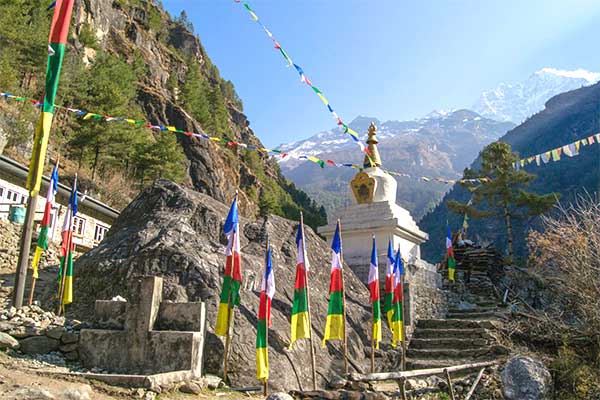
The Everest View and Sherpa Culture Trek offer a dual opportunity to explore the lifestyle and traditions of highlanders along with enjoying panoramic views of snow-capped mountains. In our journey, we follow a trail through beautiful forests, culturally rich villages, monasteries, and the land of the unsung heroes of Everest, the Sherpas. Basically, we combine the Sherpa Culture exploration along with the most popular Everest View Trekking trail.
Overview of Everest View and Sherpa Culture Trek
The Everest view and Sherpa Culture Trek begin after you arrive at the International Airport in Kathmandu. We embark on sightseeing at the UNESCO World Heritage sites around the Kathmandu Valley; followed by a pre-trip meeting and preparations. After having our early meal, we board an early morning scenic flight to Lukla airstrip and trek towards Phakding.
After crossing suspension bridges multiple times above the Dudh Koshi River, and passing through beautiful Rhododendron forests; we enter Sagarmatha National Park and arrive at the popular Sherpa village of Namche Bazaar at the end of the day. Namche Bazaar is the trading center in the Everest region.
We then follow the trail towards Khumjung, the stone-paved path that has views of potato and other vegetable fields. There is a Khumjung Gompa at the top of the town. We can see the skull of a yeti preserved since long ago at that very Gompa. From Khumjung, we ascend towards Thamo and trek down to Thame. From here you can see picturesque views of the snow-capped peaks like Kwangde and Kangpoche. Thame Gompa is located above the village overlooking the valley.
Well, in Spring, the celebrations of the Mani Rimdu festival take place there. We spent three nights at Thame. We will visit the nearby Khure Kharka pasture land as well as Kyaro Gompa on two consecutive days. Leaving Thame behind, we descend to Namche Bazaar, Lukla, and catch a flight back to Kathmandu.
Who can join this trek?
Everest View and Sherpa Culture Trek is a short and comfortable trek in the Everest region of Nepal suitable for all travel lovers who want to explore Sherpa culture, tradition, and lifestyle along with enjoying fabulous views of the Everest Himalayas. Join the trek with Nepal Mountain Trekkers and you will certainly have unforgettable trekking and exploring memories from the Everest region of Nepal.
2021
Tilicho Lake and Mesokonta la Pass Trek
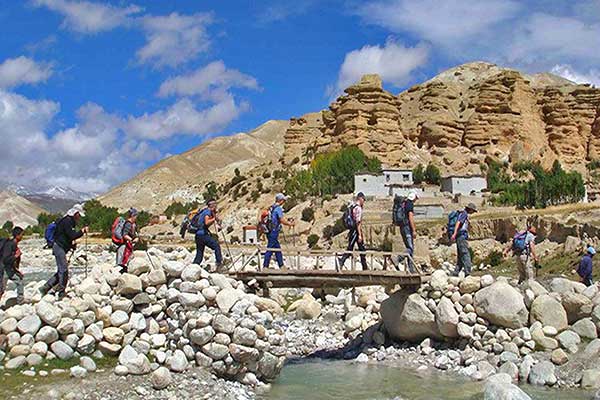
Tilicho Lake and Mesokonta La Pass Trek is a chance to experience Himalayan nature at its best. During this trek, we get to be at the highest lake in the world; Tilicho Lake. And during our 19 days of adventure, we trek through beautiful forests, picturesque landscapes, diversified vegetation, and fabulous views of the Annapurna Himalayas like never seen before. While we embark on this journey, the initial part of this adventure is that of our Annapurna Round Trek. Whereas after acclimatizing at Manang we head towards Khansar and visit Tilicho Lake via Tilicho Phedi.
Our Tilicho Lake and Mesokonta La Pass Trekking trail then cross Mesokonta La pass at an altitude of 5100m. Though it is not the highest but a technical one. Finally, we descend towards apple kingdom Marpha, across Lete Khola. And visit Tatopani for experiencing a natural hot spring followed by a trek to Ghorepani. We drive back to Pokhara and then to Kathmandu which concludes our trek.
If you would like to join our Tilicho Lake and Mesokonta La Pass Trek, please fill out this quick inquiry form and let us know. We will answer with the best recommendation and suggestions regarding the planning and preparation for this trek. And we assure you to reach your expectation regarding your queries on Tilicho Lake and Mesokonta La Trekking. Nepal Mountain Trekkers is always there for you. In addition, we are offering a special discount on this and all our packages to promote tourism in Nepal.